
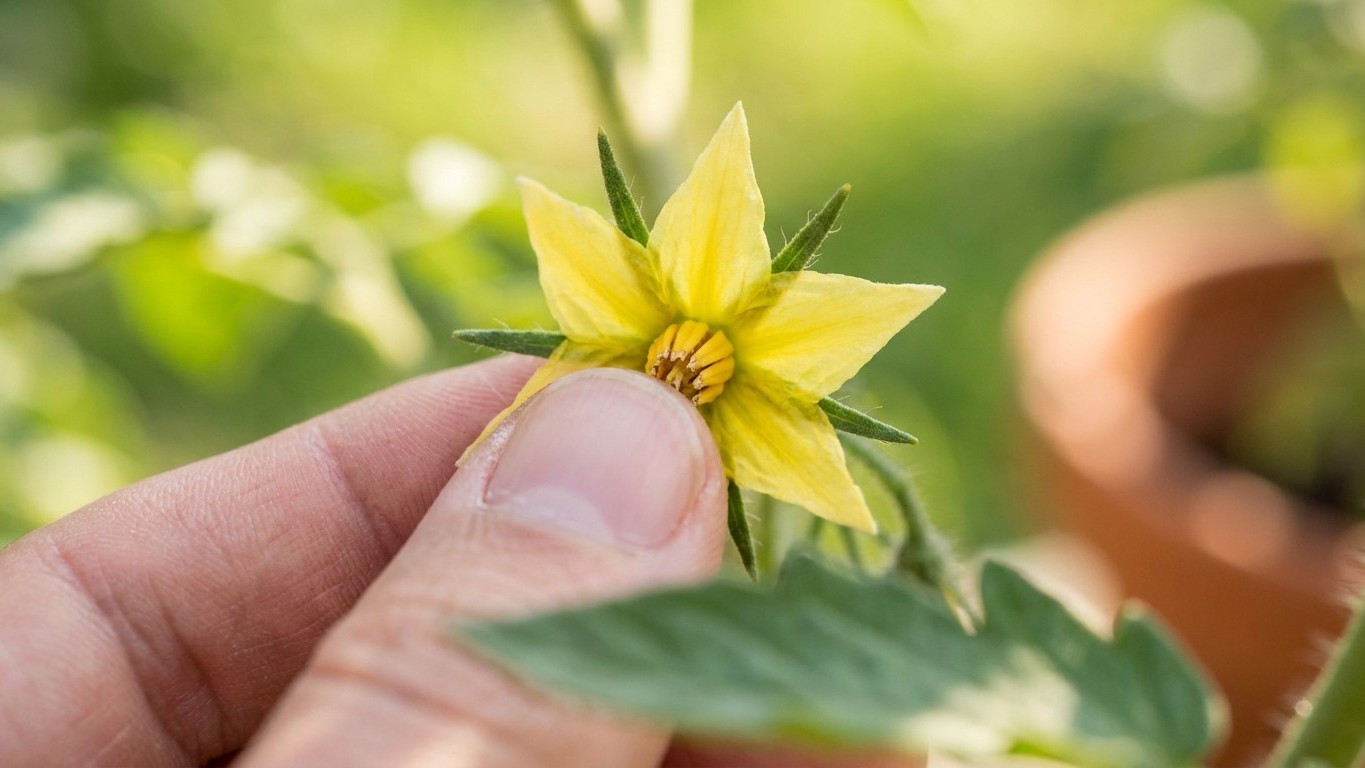
Two liters at dawn, two more at dusk. That was the routine through the entire heat spell, thermometer stuck at 38°C day after day. And yet the tomato plants kept dropping their flowers before a single fruit could form. The answer wasn’t in the soil at all. It was inside the blossoms themselves, and a five-minute look at an open flower one evening explained exactly what all that water had failed to fix.
The clue was subtle: flowers that looked perfectly yellow and cheerful from a distance, but up close showed no pollen dusting the tiny structures at their center. No stickiness, no yellow powder clinging to fingers after a gentle tap. Just clean, dry anthers that should have been coated in fertilizing material. That absence turned out to be the whole story.
Key takeaways
- Heat sterilizes tomato pollen before flowers even open, causing blossom drop weeks after a hot spell passes
- Doubling your watering schedule might actually harm your plants by encouraging disease and shallow root growth
- The real survival strategy combines shade cloth, deep morning watering, and patience—not panic irrigation
The real damage happens inside the flower, not the soil
Tomatoes are self-pollinating. Each blossom has both male and female parts, which allows them to pollinate themselves, and a visit from a pollinating insect is not required. Under normal conditions that’s an elegant system. Under sustained heat, it collapses from the inside. Tomato flowers abort when days top about 85°F and nights stay above 72°F, because heat sterilizes the pollen, so the flower can’t set. At 38°C, gardeners in much of the world are sitting well past that threshold for hours at a stretch.
Nighttime temperature matters more than most people assume. Ideal fruit set occurs within a very narrow range of night temperatures, 60° to 70°F, and if tomato plants experience night temperatures above 75°F, interference with the growth of pollen tubes can occur, preventing normal fertilization and causing blossom drop. A heat wave that never really cools off after sunset is quietly doing more damage than the scorching afternoon sun. Most pollen is shed between 10:00 a.m. and 4:00 p.m., and three hours or more at 103°F on two consecutive days can cause fruit set failure.
There’s also a delay that catches nearly everyone off guard. Today’s dropped blossoms often trace back to a hot spell that happened seven to fifteen days ago, before those flowers even opened. the empty stems noticed on a Tuesday evening were already doomed during the heat wave from two weeks earlier. The mechanism is pollen: it has to be viable, release from the anther, and germinate down the style to fertilize the ovary, all within roughly 50 hours, or the flower aborts, and sustained heat wrecks that timeline. Watering harder in the moment does nothing to reverse a process that started well before the flower even opened.
Why extra watering couldn’t fix what was already broken
Doubling the watering schedule felt logical. Hot weather, dry soil, thirsty plants: the equation seems obvious. But tomato roots and tomato flowers respond to entirely different stresses, and pouring on more water addresses only one of them, sometimes badly. One of the most common mistakes gardeners make in summer is watering tomato plants too often but not deeply enough, since a little water each day really only wets the top layer of soil. That shallow moisture evaporates fast and barely reaches the roots that actually need it.
Splitting a day’s water into two rushed sessions can also backfire on the plant’s health elsewhere. Overwatering encourages fungal diseases, reduces oxygen around the roots, and can cause tomatoes to split, and temperatures above 95°F already place tomato plants under heat stress. The fix experts point to isn’t more frequency, it’s timing and depth. Experts recommend deep, infrequent watering, preferably early in the morning. One thorough soak at sunrise does more for a stressed root system than two shallow splashes that never make it past the first few centimeters of soil.
Reading the plant correctly also means resisting panic at the wrong moment. If the plant looks limp during midday heat, that’s no cause for alarm, since it’s deliberately rolling its leaves to reduce moisture loss, a self-protection mechanism that reverses once the sun goes down, and the evening check is the most honest indicator of all, because gardeners who judge by the midday appearance almost always end up overwatering. That’s precisely the mistake I’d been making, watering out of anxiety over noon-time drooping that the plant would have solved on its own by nightfall.
What actually helps a tomato patch survive a heat spell
None of this means water doesn’t matter, quite the opposite. Consistency, not volume, is the target. The real fix combines 30 to 40% shade cloth with steady deep watering and mulch, the only combination with trial-backed yield gains. Watering directly at the base rather than over the foliage keeps leaves dry and reduces disease risk during the exact stretch when plants are already under stress. Mulch buys extra time between soakings by slowing evaporation from the surface.
Patience turns out to be the least satisfying but most accurate advice. The honest answer to heat-driven blossom drop is patience: you can’t change the weather, and the plant resumes setting fruit when it cools, so in the meantime the goal is keeping the plant healthy and unstressed with even water, mulch, and no heavy nitrogen. A few practical moves make that wait shorter or gentler:
- Water deeply once in the early morning rather than twice at random hours
- Add mulch to hold moisture and stabilize soil temperature
- Rig light afternoon shade during the worst of the heat wave
- Skip nitrogen-heavy fertilizer until temperatures ease
- Give clusters a gentle shake midday to help any viable pollen release
Not every variety suffers equally, either. Tomato plants with smaller fruit are less affected by blossom drop, so cherry tomatoes up to golf-ball size are the safest bet for growers in really hot climates, since for whatever reason the pollen doesn’t seem to be quite as affected by the high heat and humidity. The giant beefsteak varieties everyone pictures on a summer sandwich are, ironically, the first to go silent when the mercury climbs. Something worth remembering before next year’s heat wave hits: the cherry tomatoes quietly outperforming everything else on the vine aren’t lucky. They’re just built for exactly this kind of weather.
Sources : tomsguide.com | ruralsprout.com