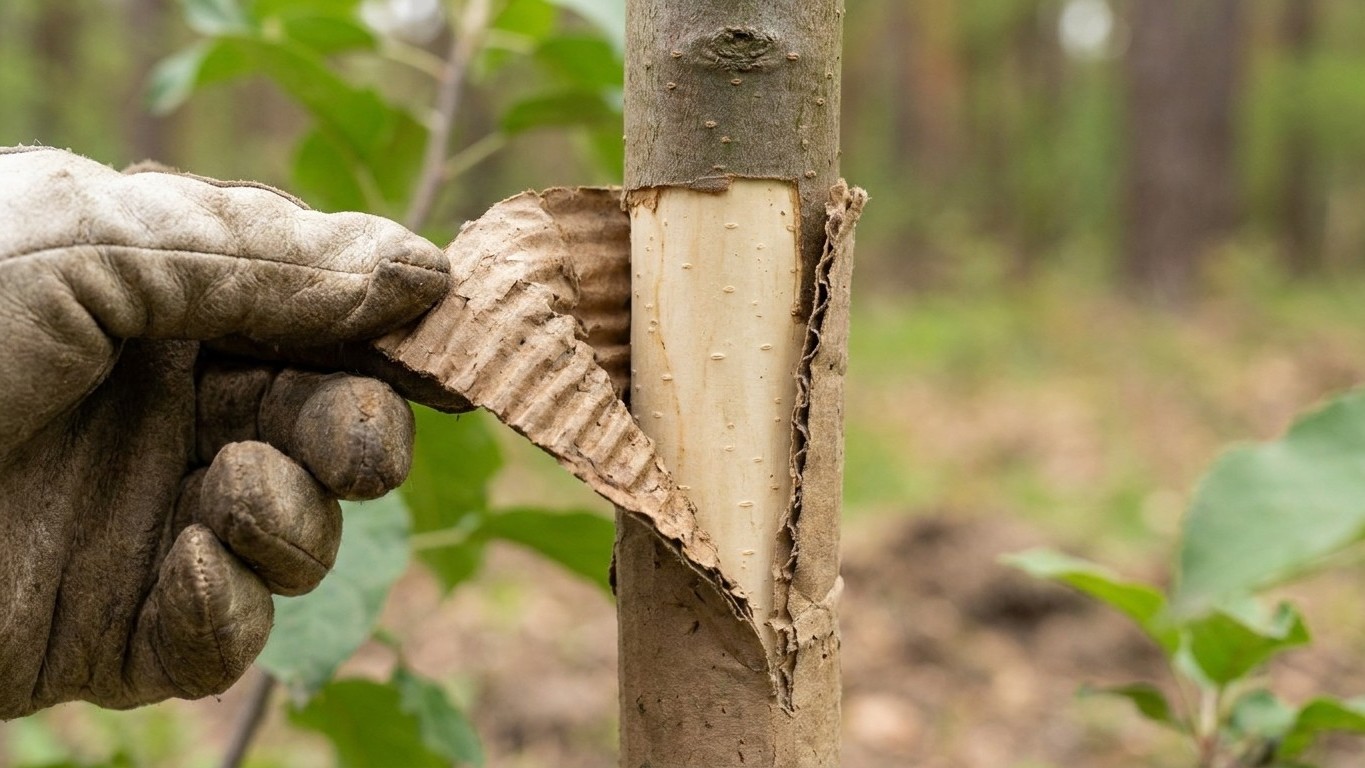
A strip of cardboard. Not a commercial tree guard, not a specialist product ordered online. Just a piece of corrugated cardboard, cut from a moving box, wrapped around the lower trunk of a young apple tree and secured with twine. Simple enough to feel almost silly, until you peel it back a month later and realize you’ve been running a quiet experiment with real consequences.
What’s underneath changes depending on whether you did it right or wrong. That’s the honest truth no one puts on the garden center tag.
Key takeaways
- Dark cardboard wrap might actually make sunscald worse, not better—the physics works against you in cold climates
- Trapped moisture under wrapping creates the perfect breeding ground for the very pests you’re trying to prevent
- What’s hidden under the bark reveals whether your protection strategy is working or masking early warning signs of pest damage
Why apple trees need bark protection in the first place
Sunscald is a fairly common physiological problem found most often on young, thin-barked ornamental and fruit trees. It comes in two forms, winter and summer, and both ultimately cause the same thing: death of bark tissue from extreme temperatures. Apple trees are specifically named among the most vulnerable species. Summer sunscald is common on apple trees, with damage typically occurring on the lower section of young trunks, particularly the south or southwest-facing side.
The winter version is sneakier. On warm winter days, the sun heats the trunk enough that sap begins to run, but if temperatures drop below freezing at night, that sap freezes inside the trunk. Sap contains large amounts of water, which expands when it freezes, causing the wood to separate and crack. Research has actually measured this: cambial temperature differences between the north and south sides of apple tree trunks can reach 17 to 20°C. That’s not a minor fluctuation. That’s the kind of thermal stress that splits bark open like dry clay.
Cracked bark allows apple borers and other pests to get into the trunk and cause serious damage. This is where the problem compounds. A small crack becomes an invitation. Female borer beetles lay eggs in bark crevices, targeting weakened or stressed trees. After hatching, larvae immediately tunnel into the tree and feed on the cambial tissue between bark and wood, creating winding galleries filled with frass. Once they’re in, they’re hard to remove without harming the tree itself.
What cardboard actually does (and what it doesn’t)
Corrugated cardboard is one of the four most common tree wrap materials. It tends to blend in with bark better than other options, but degrades quickly, especially in wet conditions. It works best in areas that don’t see heavy rain during winter months. That caveat matters more than most gardeners realize. A wet cardboard wrap that stays damp for weeks stops being a shield and starts being a problem.
Brown-colored wraps, including cardboard, actually absorb heat and can increase bark temperature rather than reduce it. Only white or silver products reliably reduce temperature extremes. This is the detail that changes everything when you peel back that cardboard a month later. If you live in a cold-climate zone and wrapped in fall expecting protection from sunscald, dark cardboard may have made things marginally worse on the sunny side, not better. The physics don’t care about intentions.
That said, cardboard still provides a genuine physical barrier. The barrier created by tree wrap can deter some insect pests and small animals from damaging the bark. Wrapping the trunk from ground level to the lower branches with several thicknesses of material before adults start to emerge in spring can be very helpful in preventing egg-laying on the bark of newly planted trees, and it should be maintained during the first season or two, or until the trees are making good growth.
What you might find under there, and what it means
A month in, the reveal can go several ways. Best case: the bark looks clean, slightly moist, undisturbed. The wrap did its job as a physical buffer against frost, rodents, and lawnmower accidents. Wrapping in late fall protects the trunk from lawn care machinery such as mowers, trimmers, and aerators, damage that accumulates invisibly over seasons and eventually opens the door to disease.
Worst case: you find mold, insect activity, or bark that looks stressed rather than protected. Applying wraps too early in fall or leaving them on too late into spring can lead to insect damage because it creates a warm, moist habitat between the wrapping and the bark. If you notice moisture buildup, mold, or pest activity underneath, remove the wrap immediately, trapped moisture creates ideal conditions for fungal diseases and insect infestations.
The third possibility is the one that genuinely changes how you think about your tree: you find sawdust-like material, small entry holes, or sap staining. Signs of borer activity include sawdust-like frass near the base of the tree and cracked or sunken areas on the bark, which often indicate galleries forming beneath the surface. If this is present, the wrap wasn’t the cause, but it may have hidden early warning signs you would otherwise have caught sooner.
How to wrap correctly, and when to stop
Trees need protection during their first three to five years, until bark thickens sufficiently to withstand environmental stresses. In colder zones (3–6), install protectors by early November to prevent frost cracking and sunscald during winter months. Timing is non-negotiable. Apply wraps in late fall to avoid frost and remove them by early spring to avoid overheating the trunk as temperatures climb.
Avoid covering the entire trunk and never use wire ties or anything that can cause girdling. The wrap should be snug but not too tight. Make sure the guard or wrap goes an inch below the soil surface and rises to just below the first branches. That bottom-to-top coverage matters because rodents and rabbits typically gnaw at the base first, the most vulnerable point, and the one most gardeners leave exposed.
On material choice: if you’re committed to cardboard, use it in dry climates and treat it as a single-season solution. For wet winters or areas with heavy borer pressure, synthetic tree wraps deter predators including small animals and insects more reliably, since their tough material acts as a more durable barrier. And if you want the gold standard for sunscald specifically, reflective foil-based materials result in the slowest rate of cambial temperature change, which is what actually protects the tissue that keeps your tree alive.
One thing worth knowing: once your apple tree reaches around ten years old and its bark has thickened enough, you won’t need to wrap anymore, the bark itself will provide sufficient insulation to protect the inner tissue from temperature extremes. The wrapping years are an investment in the decades of fruit that follow. What you find under that cardboard strip is a snapshot of whether that investment is paying off.
Sources : rubytreecare.com | constcmart.com