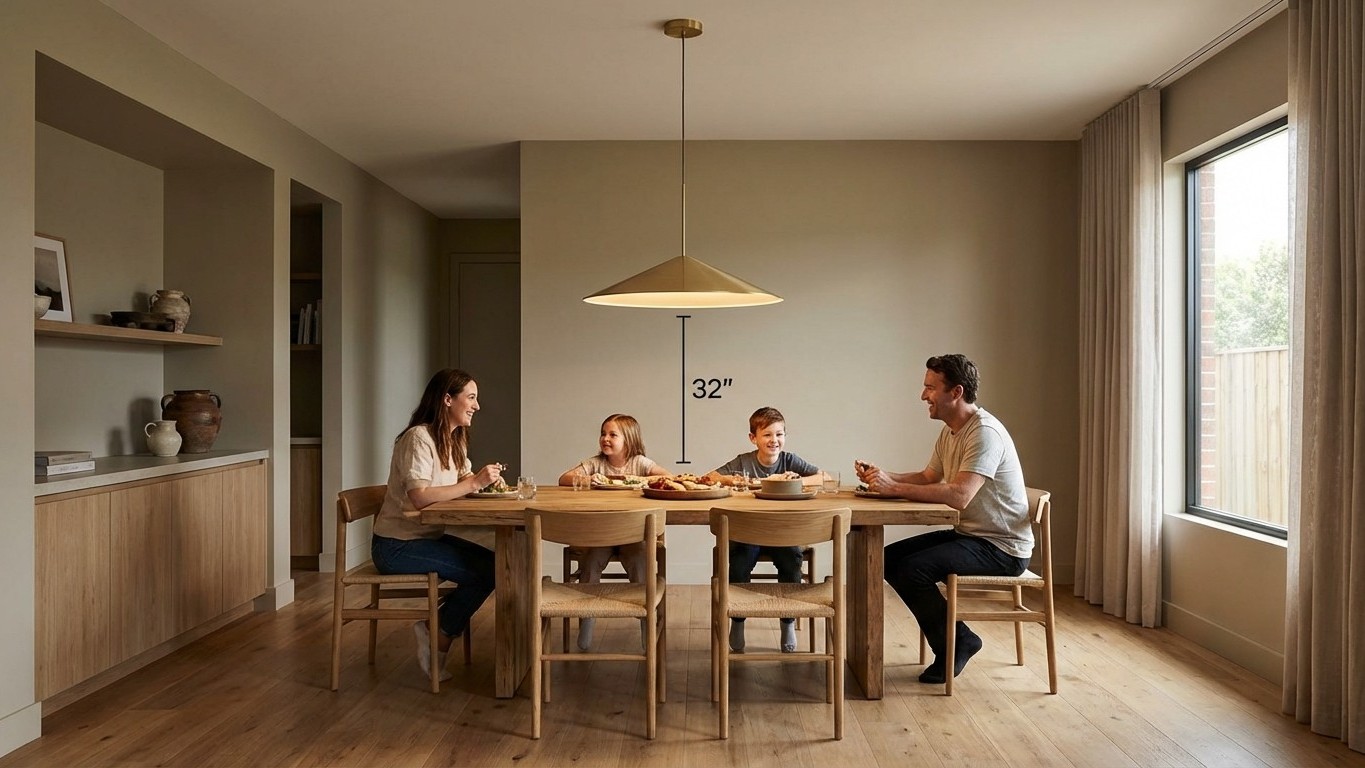
The difference between a dining room that feels awkward and one that radiates sophistication often comes down to a Mistake-i-finally-stopped-making”>single Everything-when-installing-a-Kitchen-credenza-bar”>Measurement: the height of your pendant light. While most homeowners agonize over style, color, and size, they overlook the most transformative element of all—proper positioning. The magic number that changes everything is surprisingly Simple: hang your pendant light 30 to 36 inches above your dining table surface.
This seemingly basic rule revolutionizes the entire dining experience. When a pendant hangs at the correct height, it creates an intimate pool of light that draws people together, eliminates harsh shadows on faces, and Ceilings-the-2026-color-hack-that-transforms-any-room-fast”>Transforms meals into memorable moments. Too high, and the light becomes decorative but functionally useless. Too low, and it becomes an obstruction that fragments conversation and creates visual barriers between diners.
The Science Behind the Perfect Height
The 30 to 36-inch rule isn’t arbitrary—it’s based on human proportions and lighting physics. At this height, the pendant creates what designers call a “light pool” that perfectly encompasses the dining table surface while ensuring adequate headroom for seated diners. The measurement should be taken from the bottom of the fixture to the table surface, not from the ceiling.
This positioning achieves several critical objectives simultaneously. The light spreads evenly across the table, minimizing stark shadows that can make food appear unappetizing and faces look harsh. The fixture remains within the peripheral vision of seated guests Without dominating their direct line of sight, maintaining the sense of openness that makes dining rooms feel welcoming rather than cramped.
For tables with varying heights, the rule adapts beautifully. Standard dining tables typically measure 28 to 30 inches high, making the pendant bottom fall between 58 to 66 inches from the floor—the perfect height for both functionality and aesthetics. Counter-height tables require the same 30 to 36-inch clearance, simply raising the entire fixture proportionally.
Adapting the Rule to Different Scenarios
While the basic rule provides an excellent foundation, certain situations call for thoughtful adjustments. In homes with soaring ceilings above nine feet, designers often push toward the upper end of the range or slightly beyond, allowing the pendant to maintain visual proportion with the room’s scale. The key is ensuring the fixture doesn’t Disappear into the ceiling void while maintaining its essential function.
Multiple pendants over longer tables follow the same height principle but require additional spacing considerations. Each pendant should maintain the 30 to 36-inch clearance while being spaced approximately 24 to 30 inches apart, depending on their size. This creates a rhythm of light that guides the eye along the table’s length without creating competing focal points.
The rule also accommodates different pendant styles gracefully. Large drum shades, delicate blown glass globes, and industrial metal fixtures all benefit from this positioning, though the visual weight of the fixture might influence whether you choose the lower or higher end of the range. Heavier, more substantial pieces often look better at 32 to 36 inches, while delicate fixtures can hang closer to the 30-inch mark without overwhelming the space.
Common Mistakes That Undermine the Rule
Even when homeowners know the 30 to 36-inch guideline, execution often goes awry due to common oversights. Many people measure from the ceiling rather than the table surface, leading to fixtures that hang too high when installed. Others fail to account for the full height of their chosen pendant, measuring to the top of the shade rather than the bottom edge where light actually terminates.
Chain or cord length calculations frequently create problems during installation. The total drop distance must account for the fixture’s own height, the ceiling mounting hardware, and any decorative chain or cord elements. This requires careful planning before installation begins, not hasty adjustments afterward.
Another frequent error involves ignoring the pendant’s light distribution pattern. Some fixtures cast light primarily downward, while others create ambient illumination in multiple directions. Understanding your specific pendant’s lighting characteristics helps fine-tune the exact height within the 30 to 36-inch range for optimal performance.
Transforming Your Dining Experience
When properly implemented, this simple height rule creates profound changes in how your dining room functions and feels. Meals become more intimate as the focused light Naturally draws attention to the table and the people gathered around it. Food photography improves dramatically, as the even light distribution eliminates the harsh shadows that plague poorly lit tables.
The psychological impact proves equally significant. Properly hung pendants create a sense of enclosure and intimacy that encourages longer, more meaningful conversations. The dining table transforms from merely functional furniture into the heart of the home, a space that naturally attracts family and friends.
This rule works regardless of your design style or budget. Whether you choose a high-end designer piece or an affordable option from a home improvement store, proper positioning maximizes its impact. The investment in correct installation—sometimes requiring professional help to adjust electrical boxes or chain lengths—pays dividends in both functionality and aesthetics for years to come.
Mastering this single rule empowers you to create dining rooms that feel professionally designed while avoiding the costly mistakes that plague amateur installations. Your pendant light becomes more than illumination—it becomes the defining element that transforms everyday meals into special occasions.