
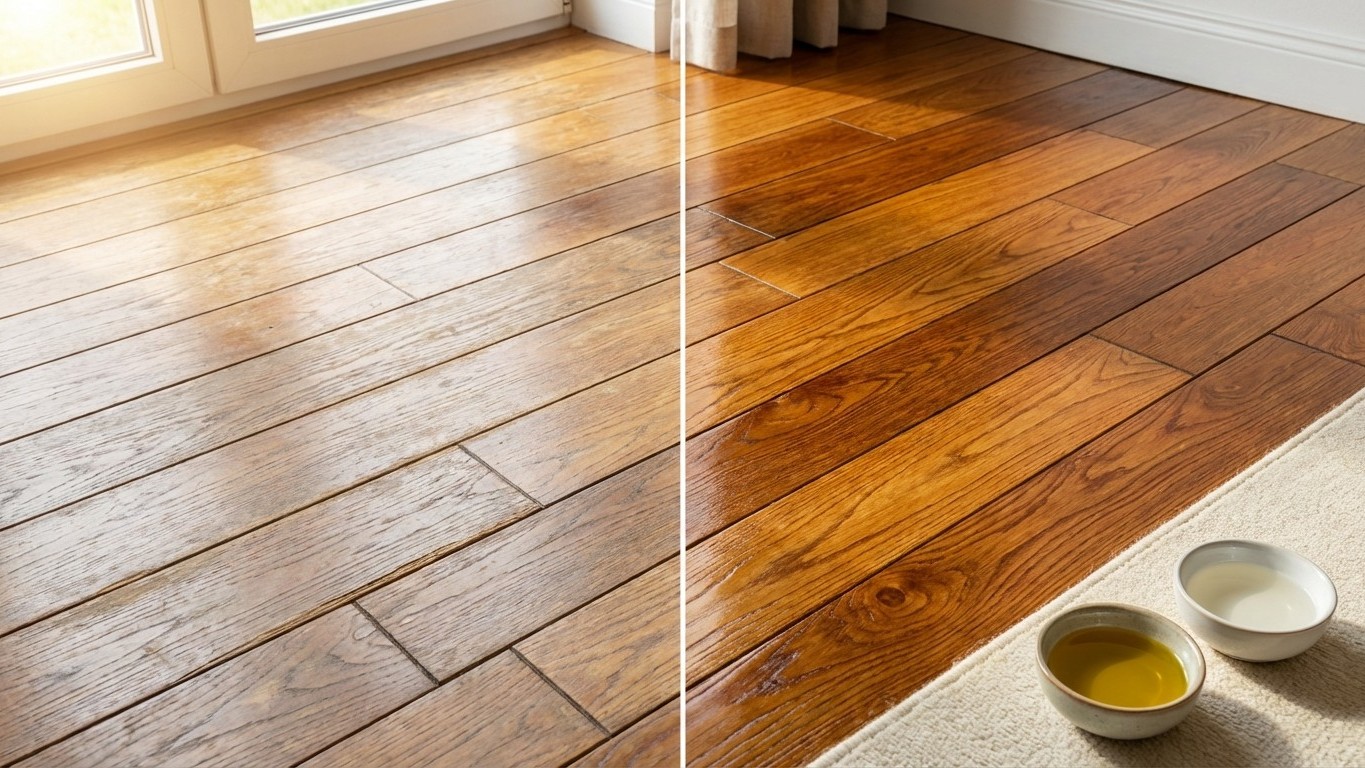
After staring at my lackluster hardwood floors for what felt like an eternity, I’d resigned myself to the inevitable: an Expensive refinishing project involving dust, noise, and professional contractors. The parquet that once gleamed with warmth had become a dull, lifeless surface that made my entire living space feel tired and neglected. But sometimes the most effective solutions hide in plain sight, disguised as humble household ingredients.
The transformation I’m about to share didn’t require power tools, chemical strippers, or even leaving my home for days while contractors worked their magic. Instead, it involved two simple ingredients that most people already have in their pantries, combined with a technique that breathes new life into worn hardwood without the drama of traditional refinishing.
Understanding Why Parquet Loses Its Luster
Before diving into the solution, it’s crucial to understand what happens to hardwood floors over time. Years of foot traffic, cleaning products, and environmental factors create a buildup of residue and micro-scratches that collectively dull the wood’s natural beauty. Traditional wax-based Cleaners, while well-intentioned, often leave behind a film that traps dirt and creates that characteristic cloudy appearance.
The wood itself remains structurally sound underneath this accumulated layer of grime and product buildup. This is why aggressive sanding often feels like overkill – you’re essentially removing healthy wood to address what is primarily a surface-level problem. The key lies in finding a method that dissolves and removes this buildup while nourishing the wood beneath.
The Two-Ingredient Renaissance Formula
The magic happens when you combine white vinegar with olive oil in specific proportions. This isn’t just another internet cleaning hack – it’s a time-tested approach that addresses both the cleaning and conditioning aspects of floor restoration simultaneously. The vinegar acts as a natural solvent, breaking down the accumulated residue and grime that dulls your floors, while the olive oil penetrates the wood fibers to restore moisture and bring back that coveted natural sheen.
The ratio matters significantly for optimal results. Mix one part white vinegar with three parts olive oil, creating enough solution to cover your entire floor area. This proportion ensures the vinegar’s cleaning power doesn’t overwhelm the wood while allowing the olive oil to provide adequate nourishment and protection. Too much vinegar can strip the wood excessively, while too little won’t effectively remove the buildup that’s masking your floor’s beauty.
Application requires patience and attention to detail. Working in manageable sections, apply the mixture using a microfiber cloth or soft cotton rag, following the grain direction of the wood. Allow the solution to sit for several Minutes – this dwell time is crucial for the vinegar to work its magic on stubborn residue. Then, using a clean, dry cloth, buff the area in circular motions followed by long strokes with the grain.
The Science Behind the Transformation
What makes this combination so effective lies in basic chemistry. Vinegar’s acetic acid naturally dissolves the alkaline residues left by many commercial cleaning products, while its antimicrobial properties address any mold or mildew that might be contributing to the dull appearance. The olive oil contains natural compounds that penetrate wood pores, replacing lost moisture and creating a protective barrier that enhances the wood’s natural color and grain pattern.
Unlike commercial floor refinishing products that often contain harsh chemicals, this natural approach works with the wood rather than against it. The gentle nature of these ingredients means you can repeat the process as needed without fear of damaging the wood fibers or creating long-term problems.
Beyond the Basic Treatment
The initial application often reveals dramatic improvements, but maintaining these results requires understanding proper floor care moving forward. Once you’ve restored your parquet’s natural beauty, regular maintenance becomes infinitely easier. Weekly cleaning with a barely damp mop and monthly touch-ups with the vinegar-oil mixture will keep your floors looking professionally maintained.
Pay attention to high-traffic areas that may need more frequent treatment. Entryways, kitchen pathways, and areas around Furniture typically show wear first and benefit from targeted applications every few weeks. The beauty of this approach is its flexibility – you can treat problem areas without committing to refinishing the entire floor.
Environmental factors also play a role in maintaining your newly restored floors. Controlling humidity levels, using appropriate entry mats, and addressing spills quickly will extend the time between deep treatments. The natural oils in this mixture Actually-reveal-a-bored-dog”>Actually help Protect against minor water damage and everyday wear, creating a living finish that improves with proper care.