
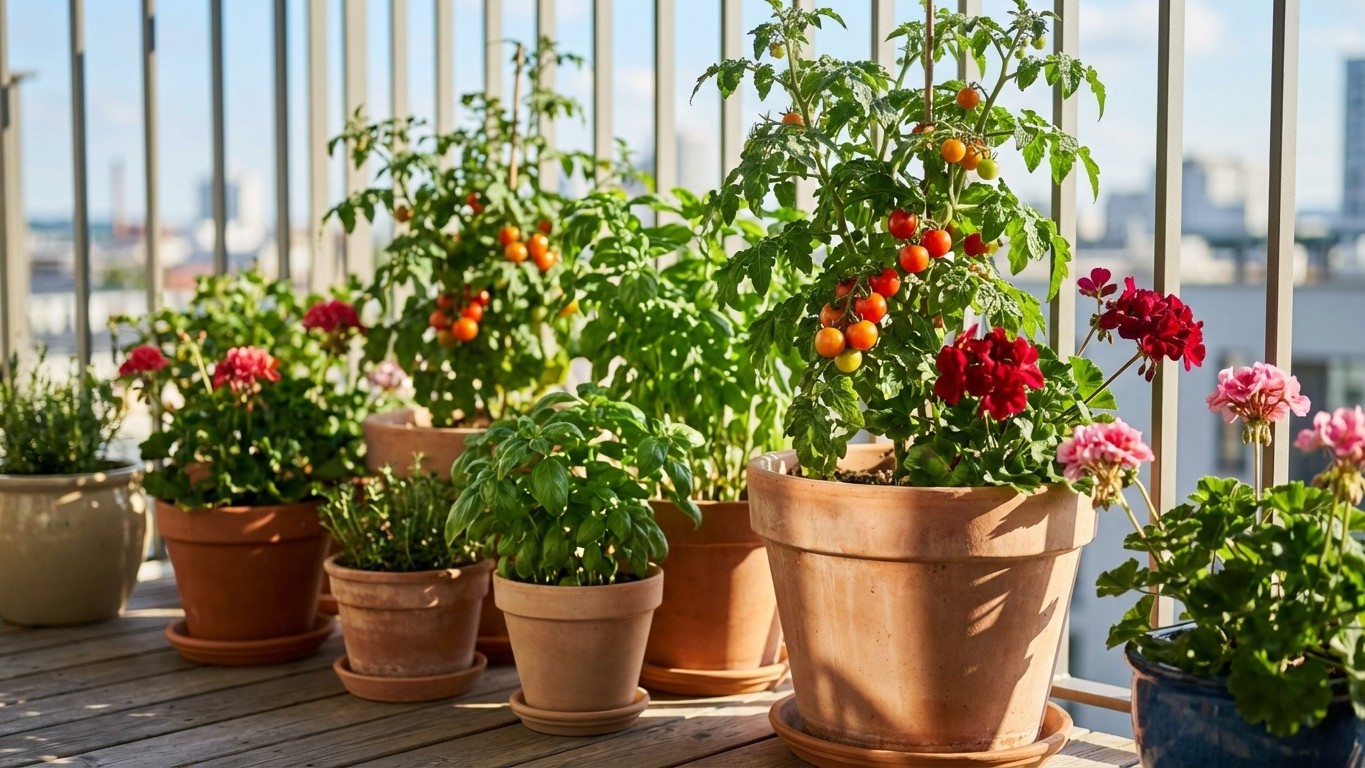
A handful of pots, a sunny railing, and suddenly your apartment balcony produces cherry tomatoes you actually want to eat, fresh basil that smells nothing like the plastic-wrapped supermarket kind, and geraniums bold enough to make your neighbors stop and look up. Urban balcony gardening has quietly become one of the most satisfying domestic projects of the decade, not because it’s easy, but because even a 30-square-foot space can be genuinely productive when you make the right plant choices from the start.
The single biggest mistake beginners make? Picking plants they love rather than plants that fit their space.
What direction does your balcony face? South-facing balconies are the best, but southeast- or southwest-facing will do. Even with a north-facing exposure, you can still grow plants, you just need to be strategic about which ones and consider shade tolerant plants for balcony pots. That orientation question, along with wind exposure, available weight capacity, and your own cooking habits, is where every successful balcony garden actually begins. If you’re dealing with strong winds, consider our guide to the best flowers for windy balcony containers to ensure your plants can withstand challenging conditions.
This guide covers the full spectrum: ornamental flowers, edible vegetables, and culinary herbs, all selected for container life in an urban environment. For those particularly interested in the aromatic side of balcony gardening, you’ll find detailed guidance on the best herbs to grow in containers on balcony spaces, while those focused on food production will appreciate our comprehensive list of easy vegetables to grow in pots on a balcony. If you’re dreaming of fresh fruit from your balcony, our guide to dwarf fruit trees in pots for balcony spaces will help you choose the right varieties. Each category comes with specific advice so you can stop guessing and start growing.
Why gardening in pots on a balcony is worth the effort
Plants purify the air, reducing pollutants and boosting oxygen levels. Greenery enhances your outdoor space, making your balcony a tranquil escape. Home-grown vegetables, berries, or herbs reduce your reliance on chemically-treated, store-bought produce. Gardening lowers cortisol levels, which helps with stress relief and mental health.
That last point deserves a moment of attention: the simple act of watering a pot in the morning changes the rhythm of a day. City life rarely offers that.
Beyond wellness, the portability of containers is a real functional advantage.
Plants grown in pots or containers allow complete control over soil quality and placement, and are highly flexible for small spaces. Containers can be moved to suit the sun’s position.
That mobility means you can chase sunlight as the season shifts, or pull plants inside the moment frost threatens. No ground-based garden can do that.
For a deeper overview of how to set up your space from scratch, the resource on container gardening small space balcony urban walks through the full setup process, from load-bearing limits to drainage systems.
Key criteria for choosing the right balcony container plants
Exposure: sun, shade, and everything in between
Most vegetables require 6–8 hours of sunlight per day. For shaded areas, select low-light-tolerant vegetables.
That rule applies across the plant kingdom, but the nuances matter enormously.
Most vegetables require at least six hours of sunlight per day. Salad greens and herbs can usually get by with less. Tomatoes, peppers, beans, and other sun-lovers will appreciate as much sun as they can get.
The practical implication: before buying a single seed or seedling, spend two or three days observing when and how long direct sun hits your balcony floor, railing, and walls at different heights. A north-facing balcony receiving three hours of sun per day is a completely different environment from a south-facing one baking in eight. Your plant list should reflect that reality, not your wishlist.
Urban climate: wind, heat, and pollution resistance
City balconies, especially above the third floor, expose plants to conditions that open gardens rarely face.
Wind is a significant factor to consider. Plants will be happiest in a protected location where the wind doesn’t batter and dry out their foliage. Use the shelter of a building, or erect a temporary windbreak made from portable fencing or fabric. Arrange your pots so larger plants shield smaller plants.
Clustering pots also raises ambient humidity, which benefits moisture-sensitive plants during summer heat waves.
Air quality is often overlooked. Plants like lavender, geraniums, and hardy Mediterranean herbs tolerate urban pollution better than delicate ornamentals. When in doubt, choose sturdy over pretty.
Adult size, root depth, and container matching
Container depth is a technical constraint that cannot be fudged.
Reserve shallow pots (less than 20 cm) for quickly harvested crops with superficial root systems: all varieties of salads, annual aromatics, radishes, and round carrots. The deepest pots (over 40 cm) are for fruiting vegetables with deep root systems.
Getting this wrong, planting a tomato in a 15cm pot, for example, virtually guarantees failure, no matter how good the sun exposure.
Container size matters: small vegetables like lettuce or radishes require 6–8 inch deep pots, while larger vegetables like tomatoes or peppers need 12–18 inches.
Think of it this way: if the pot would look small under a full-grown plant, it is.
Watering needs and substrate quality
Container vegetables require careful water management. Monitor moisture regularly; containers dry out faster than ground soil. Water deeply but avoid waterlogging.
This single issue accounts for more balcony garden failures than any pest or disease.
As a general rule, select as large a container as possible. Small containers dry out more quickly and may need daily watering.
For substrate, a quality potting mix that combines compost, a moisture-retaining element like coco coir, and a draining agent like perlite outperforms cheap universal soil every time.
A nutrient-rich, well-draining potting mix with compost or organic matter is essential.
Ornamental plants for balcony containers
Flowering plants: robust, colorful, and long-blooming
The most forgiving flowering plants for urban balconies are also, not coincidentally, some of the most beautiful.
Lavender is highly decorative and aromatic, withstands heat well, and requires little watering. It also attracts bees and butterflies. Geraniums are classics on Mediterranean balconies, bloom for much of the year, and require moderate watering.
Petunias are one of the most popular balcony annuals thanks to their beautiful colorful flowers that spread their delicate scent at night. Given nutritious soil and plenty of sun, petunias grow quickly in any pot. They are relatively drought and heat tolerant, but require regular watering when grown in pots.
Their trailing habit makes them natural partners for railing planters, a cascade of violet or deep red spilling over the edge of a window box is hard to beat visually.
For shade situations, impatiens are the reliable answer.
Impatiens are unbeatable for continuous color in shade. They produce a constant succession of flowers with minimal deadheading and are available in a wide palette. New Guinea impatiens are larger-flowered, more tolerant of some sun, and available in striking bicolors.
Decorative foliage and structural plants
Structure matters as much as bloom. Coleus offers drama without flowers, coleus is grown for its colorful leaves, in combinations of green, white, pink, red, and maroon. The spikes of flowers add another element of interest if planting on a balcony. Plants can reach 36 inches tall, depending on the variety. Newer coleus cultivars can be planted in sun or shade.
For shaded north-facing balconies, heuchera (coral bells) offers year-round interest.
Heuchera captivates with stunning foliage year-round. These cold-hardy plants are ideal for shaded balconies, where they serve as striking centerpieces in planters. Available in various colors, their lush leaves add visual interest, transforming any space into a vibrant haven.
Plant selection by sun exposure
Choosing by exposure rather than aesthetics first is the professional approach. For full sun: lavender, geraniums, petunias, lantana, and portulaca. For partial shade to shade: fuchsias, impatiens, heuchera, and begonias.
Fuchsias offer pendulous, two-tone flowers that are unmistakable and deeply elegant. They prefer cool, moist conditions and shelter from the hottest afternoon sun. Standard fuchsias suit tall pots and planters, while trailing varieties are made for hanging baskets.
For a curated selection of plants organized precisely by exposure and skill level, the guide on the best plants for balcony container garden goes into greater detail on species pairing and seasonal sequencing.
The best vegetables to grow in pots on a balcony
Leafy greens: lettuce, spinach, arugula
Leafy greens like lettuce, spinach, and kale are particularly suited to urban gardens confined to small spaces. You can plant them in rows in repurposed rain gutters mounted on a wall or railing.
That gutter trick is genuinely useful: a 6-foot section of rain gutter mounted at railing height adds planting area without using floor space, and leafy greens are perfectly happy in the shallow depth it provides.
Arugula is especially valuable for its speed.
Arugula loves the heat and is a no-fuss type of plant. Put it in a medium size container in full sun.
It germinates fast, grows faster, and can be cut repeatedly at soil level for multiple harvests from a single sowing. Spinach works similarly, spinach is very easy to grow and can be harvested year-round depending on the variety. Keep the pot in shade and give it a well-drained and rich soil.
Fruiting vegetables: cherry tomatoes, peppers, cucumbers, mini eggplants
Cherry tomatoes are the poster child of balcony edible gardening, and for good reason.
Tomatoes, which are sensitive to inconsistent watering, thrive with moisture monitoring.
Cherry tomatoes need a deep container and at least 6 to 8 hours of full and direct sun each day. They require constant humidity, but without overwatering, which would reduce fruit flavor. Cultivate them in a warm and sunny area.
Peppers are equally rewarding and more compact.
Peppers thrive in close quarters — two pepper plants can successfully grow in an 18 to 24-inch container.
Choose compact varieties explicitly labeled for container growing. For eggplants, mini varieties need the same sunny exposure but reward patience:
growing eggplants is quite easy, even in a container. They prefer heat during the day and also at night.
A more detailed breakdown of fruiting and leafy vegetables that reliably succeed in urban pots is available in the companion article on easy vegetables to grow in pots on a balcony.
Root vegetables and tubers adapted to container growing
Root vegetables like carrots, radishes, beets, and turnips can grow well in containers. Just choose a pot that is deeper than the vegetable you’re planting.
For carrots specifically, compact varieties labeled “round” or “mini” perform far better than standard types in pots.
Classic carrots require too much space in a pot. Choose short-rooted or round varieties instead, and plant them in a mix of potting soil and sand.
Radishes deserve special mention for beginners:
radishes are great, easy, and fast. Use containers of at least 15 cm in depth, and harvest in approximately 3 weeks.
Three weeks from seed to harvest is genuinely motivating when you’re just starting out.
Individual pots vs. shared planters: calibrating space
One large shared planter consistently outperforms five small individual pots, for one simple reason.
Get as large a pot as you can manage. It’s better to have many plants in one pot than a collection of tiny pots.
A larger volume of soil holds moisture longer, maintains more stable temperatures, and provides better root development. The visual result is also stronger, a lush, overflowing planter always looks more intentional than a scattering of miniature pots.
Essential herbs for balcony container gardens
Basil, parsley, mint, chives, thyme, rosemary: how to get them right
Herbs are where the balcony garden pays its rent in kitchen currency.
Growing herbs is an easy way to get started with balcony gardening because they grow well in containers and don’t take too much space.
Basil is the most demanding of the common herbs: it needs heat, good light, moisture, and regular pinching.
Basil does well in containers given enough sun and a good amount of water. Unlike some herbs that enjoy poor soil conditions, basil craves nutrients and does better with a bit of fertilizer.
Pinch the growing tips regularly to prevent flowering and keep leaf production going.
Rosemary sits at the opposite end of the care spectrum.
Fresh rosemary is one of the handiest herbs to have readily available. It’s also very easy to grow as it’s both durable and drought-resistant.
Rosemary should only be watered when the soil starts to appear dry.
Mint requires its own note:
mint can be invasive, so keeping it in a separate container is important. This will prevent it from overtaking other plants.
Herbs that appreciate full sun and moderately watered soil include dill, bay laurel, oregano, rosemary, sage, thyme, and lemon verbena. Those that prefer cool, moist conditions and filtered exposure include chervil, chives, lemon balm, mint, and parsley.
Grouping herbs by those moisture and light needs, Mediterranean sun-lovers together, cool-shade herbs together, saves enormous amounts of time and prevents failures from mismatched care routines.
Positive herb-vegetable associations
Companion planting works in containers too, and some combinations are genuinely synergistic.
Play with associations: tomato and basil, cucumber and dill, bean and savory.
Those pairings aren’t just culinary tradition — the aromatic compounds in the herbs can deter specific pests, and the shade from taller vegetables can protect moisture-sensitive herbs at root level.
Growing herbs like cilantro and parsley in the same pot as peppers works well: the peppers provide shade for the herbs, which in turn help keep the soil cooler and prevent weeds.
Perennial or annual herbs?
The distinction matters practically, especially for small spaces. Thyme, rosemary, sage, oregano, and chives are perennials — plant once, harvest for years. Basil and cilantro are annuals that must be replanted each season.
Rosemary is a perennial plant. To the surprise of many growers, it survives the winter, and new growth appears in the spring. Since rosemary is a perennial plant, it will regrow each year if the conditions are right.
Thyme and oregano are perennial herbs that grow well in shallow containers.
That matters for space planning: shallow, long window boxes mounted on railings can hold a permanent collection of perennial herbs that need minimal annual replanting effort.
Everything about herb combinations, companion planting strategy, and seasonal care is covered in depth in the article on herbs to grow in containers on balcony.
Plant selection by common balcony constraints
Windy balconies
Height and exposure create conditions that can snap stems and shred leaves within days. For windy spots, choose low-growing or compact plants that don’t offer much resistance to air flow. Lavender, thyme, geraniums, and petunias all handle wind reasonably well. Taller plants like cherry tomatoes and climbing cucumbers will need staking and some form of windbreak.
Perennials, succulents, and climbing plants are ideal for sunny and windy balconies.
For any plant over 30 cm tall in an exposed location, staking is non-negotiable.
Very sunny south-facing or heat-exposed balconies
One of the most common situations on balconies is direct sunlight for long hours. These conditions can quickly dehydrate plants and burn their leaves.
The solution isn’t to avoid sun-loving plants but to manage water and container color. Light-colored pots absorb less heat than dark ones, protecting roots from overheating. Self-watering containers become essential rather than optional in these conditions.
Agaves and succulents require almost no Maintenance and thrive even in urban desert climates.
For edibles in intense heat, cherry tomatoes, peppers, and eggplants all welcome it, provided watering keeps pace.
Shaded or north-facing balconies
A north-facing balcony isn’t a lost cause. It’s a different garden, not an impossible one.
In a shady kitchen garden, root and leaf vegetables will develop quickly. However, avoid planting cherry tomatoes, as these require the warmth of the sun. Only 20 cm of potting soil depth is needed for the growth of lettuces, arugula, or watercress.
If your balcony is poorly exposed, avoid sun-loving vegetables (eggplant, zucchini, peppers, tomatoes) and choose species that are less demanding in terms of sun and heat.
Leafy greens, chives, parsley, mint, ferns, fuchsias, impatiens, and heuchera all perform well without direct sun. The north-facing balcony becomes a salad and herb garden, not a tomato garden.
Unusual and original plants to try on a balcony
Dwarf fruit trees and small fruits
Growing fruit on a balcony sounds more ambitious than it actually is.
Strawberries, dwarf citrus, and dwarf blueberries are among the most reliable fruit plants for balconies. They adapt well to pots and tolerate variable conditions better than most fruit trees. They benefit from quality potting mix with good drainage.
Strawberries are the easiest entry point.
Strawberries are one of the easiest fruit plants for balconies. They grow shallow roots, produce fruit quickly, and fit well in pots, troughs, and hanging planters. Because they stay low and spread gently, they suit narrow balconies and rail planters. They are also forgiving if conditions are not perfect, which makes them ideal for beginners or families gardening with kids.
For something more ambitious, compact blueberry varieties offer both fruit and ornamental interest.
Blueberries are one of the easiest superfoods to grow at home. The fruit contains a high level of vitamins and antioxidants, and the plant’s compact habit makes it an ideal choice for any gardener who aspires to grow berries in containers on a balcony or deck. Many types of blueberries are self-fertile.
For dwarf citrus, lemons and kumquats adapt well to pots, spending summers outside and wintering indoors in colder climates.
The best fruit trees for containers are fruit trees that have been grafted onto dwarf rootstock.
Detailed guidance on managing fruit trees across seasons, including pruning and winter protection, is available in the dedicated guide on dwarf fruit trees in pots for balcony.
Rare and exotic aromatic plants
Beyond the standard herb lineup, a few less common options reward the curious. Vietnamese coriander is faster and more heat-tolerant than standard cilantro, and rarely bolts. Lemon thyme offers a citrus note that pairs beautifully with fish. Kaffir lime (makrut lime), grown in a sunny spot, provides leaves used in Thai cooking that cost a fortune at specialty grocery stores. The logic is simple: grow what you actually cook with, prioritizing high-value ingredients that are expensive to buy or hard to find fresh.
Practical tips for successful balcony planting
Planting calendar and crop rotation
In containers, it is advisable to vary cultures from one season to the next. Avoid replanting tomatoes in the same spot two years in a row to limit disease and preserve substrate quality. After each cycle, enrich or renew the potting mix by adding compost or natural fertilizers. This guarantees good fertility for the following crops.
Spring is the primary planting season for most edibles, but the balcony calendar runs year-round with the right selections. Leafy greens and cold-tolerant herbs like chives, parsley, and thyme can extend the season well into fall and even winter in mild climates. Succession sowing, planting a small batch of lettuce or arugula every three weeks rather than all at once — ensures a continuous harvest rather than a single glut.
Choosing good plants and seeds
For beginner growers, seedlings (starter plants) outperform seeds for most vegetables, because they eliminate the most failure-prone phase. For herbs specifically, buying starter plants from a nursery is smarter than seeding for flavor-sensitive varieties.
Some herbs such as oregano and thyme vary so much in taste that they really should be started from transplants purchased from a garden center.
Sample before you buy when possible, the flavor difference between an indifferent oregano plant and a good one is enormous.
One practical tip that saves money long-term: start with compact varieties explicitly labeled for container or patio growing. Standard-sized plants of the same species will technically grow in pots but underperform dramatically compared to varieties bred for restricted root space. The label matters.
Frequently asked questions about balcony container plants
What plants grow best in pots on a small balcony? The most reliable performers regardless of exposure are herbs (thyme, chives, parsley), cherry tomatoes in sunny spots, leafy greens in partial shade, geraniums for color, and petunias for trailing impact. These all tolerate the inconsistencies of container growing better than most alternatives.
What vegetables and herbs are easiest to grow in pots in the city?
Excellent options include various lettuces (romaine, butterhead), spinach, kale, Swiss chard, arugula, and herbs like basil, mint, parsley, and cilantro.
Radishes, cherry tomatoes, and chives round out the beginner’s list. All are fast-growing, forgiving of inconsistent care, and produce visible results within weeks.
What exposure does each type of plant need on a balcony?
Most vegetables require at least six hours of sunlight per day. Salad greens and herbs can usually get by with less. Tomatoes, peppers, beans, and other sun-lovers will appreciate as much sun as they can get.
Ornamentals follow similar rules: geraniums, lavender, and petunias want sun; fuchsias, impatiens, and heuchera prefer shade.
Can you grow fruit or small trees on an urban balcony? Yes, with realistic expectations.
Balcony-friendly dwarf fruit plants make fruit growing possible in small spaces, but success comes from working with the balcony rather than against it. These plants are designed to stay compact, grow steadily, and fruit within limits.
Strawberries are the simplest starting point; dwarf citrus and blueberries are the next step up.
Further resources and inspiration
The balcony garden you’re imagining doesn’t require a green thumb or a large budget, it requires good plant choices matched to real conditions. Start by observing your exposure for a full day, then select one category to begin: a trio of herbs, a cherry tomato plant, or a pair of geraniums for color. That first season teaches more than any guide can.
Once the basics are established, the range of what’s possible expands quickly. A balcony that starts with three herb pots can, within two seasons, support a full kitchen garden with leafy greens, fruiting vegetables, edible flowers, and a dwarf blueberry bush that doubles as ornamental interest in fall. The constraint was never really the space. It was knowing what to plant where, and that’s exactly what this guide was built to answer.
To go further, explore the full resources in this series: container gardening small space balcony urban for setup and infrastructure, easy vegetables to grow in pots on a balcony for a focused edible selection, herbs to grow in containers on balcony for aromatic plant pairing, and dwarf fruit trees in pots for balcony for when you’re ready to take it further. What you grow next is the interesting question.