The last time I dug a traditional flower bed, I threw out my back for two weeks. That was the end of it. No more turning compacted clay, no more wrestling with roots, no more afternoons spent hunched over a spade wondering why Gardening is supposed to be relaxing. A neighbor mentioned cardboard. I was skeptical. Three seasons later, my beds are producing soil so dark and crumbly it looks like something from a bag, except it’s free, and the earthworms practically throw a party in it.
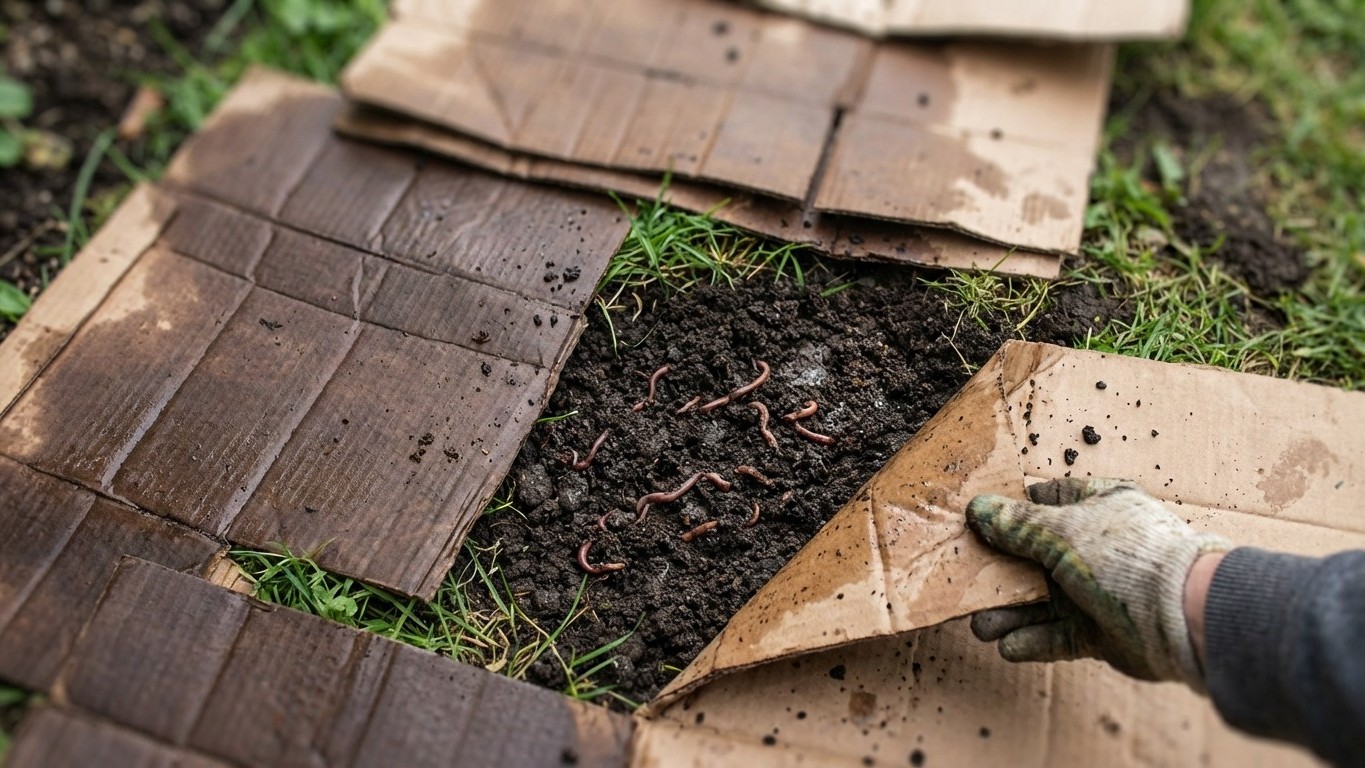
The method is called sheet mulching, or sometimes lasagna gardening, and the science behind it is straightforward. You’re essentially tricking the ground into doing the work for you. Lay cardboard directly over grass or weeds, wet it thoroughly, pile organic material on top, and walk away. The cardboard smothers whatever was growing there, breaks down over several months, and feeds the soil biology that does the actual composting. No digging required. No herbicide. No rototiller rental.
Key takeaways
- A simple cardboard-based method produces garden soil so rich it rivals bagged compost—and costs almost nothing
- The buried cardboard feeds beneficial microbes and earthworms, tripling worm populations in a single season
- You can start this weekend with materials from your recycling bin and a trip to the grocery store
Why Cardboard Works Where Other Shortcuts Don’t
Landscape fabric, the classic alternative to digging, has one fatal flaw: it lasts too long. After a few years, it sits in the ground as a synthetic barrier while weeds thread through it anyway and soil beneath it compacts into something resembling concrete. Cardboard does the opposite. It degrades completely, typically within four to six months in warm, moist conditions, leaving behind cellulose that feeds fungi and bacteria. Those organisms are the engine of healthy soil.
The key ingredient is the cardboard itself. Plain brown corrugated boxes work best, the kind you have stacked from online deliveries. Strip off any tape, remove staples, and avoid glossy printed surfaces or boxes with heavy chemical inks. Grocery stores and appliance retailers will often hand over entire pallets of the stuff for free. A queen-size mattress box, unfolded flat, can cover a six-foot garden bed in a single sheet. Overlap the edges by at least six inches so no determined weed finds a gap to exploit.
Moisture is what activates the whole process. Soak the cardboard before you layer anything on top, and soak it again after. Dry cardboard can actually repel water initially, which slows everything down. Once it’s wet and pressed flat against the soil, it creates a warm, humid environment underneath, exactly what earthworms and decomposers need to get started.
Building the Layers That Feed Your Future Beds
What goes on top of the cardboard matters more than most people realize. This is where you build the actual growing medium, and the deeper the better. Aim for at least six inches of organic material; eight to ten inches if you’re planting the same season. The classic combination is alternating “brown” and “green” layers, the same logic as hot composting. Browns (straw, dried leaves, wood chips) provide carbon. Greens (grass clippings, kitchen scraps, fresh garden trimmings) provide nitrogen. Together, they decompose into something your plants will spend years drawing from.
A practical starting stack might look like this: two inches of compost directly on the wet cardboard, then four inches of straw or shredded leaves, then another two inches of compost on top. Some gardeners finish with a layer of wood chips to lock in moisture and regulate temperature. The layering doesn’t have to be perfect. This isn’t a lab experiment. The microbial community in soil is extraordinarily good at sorting out uneven inputs, just give it material to work with.
One thing worth considering: if you’re planting perennials or shrubs within the first season, cut an X through the cardboard at each planting spot and fold back the flaps. The roots go directly into the native soil below. For annuals and vegetables, plant into the compost layer on top, which by late spring will have already begun to knit together into something workable.
What Happens Underground (and Why It’s Worth Waiting For)
Here’s the part that converted me completely. After the first winter, I pulled back a corner of one of my sheet-mulched beds out of curiosity. The cardboard had gone pale and soft, more like wet paper than structural material. Underneath it, the soil looked different. Looser. Darker. Earthworm castings everywhere, which is essentially the best possible news for a gardener, worm castings contain plant-available nutrients at concentrations that rival synthetic fertilizers, without the salt buildup.
The data on earthworm density in sheet-mulched beds is genuinely striking. Research from the Rodale Institute and various university extension programs has found that no-dig methods can triple earthworm populations within a single growing season compared to conventionally tilled plots. Those worms, in turn, create channels that improve drainage, pull organic matter deeper into the soil profile, and leave behind a microbial network that plants tap into directly. The soil isn’t just fertile, it becomes structurally different, more porous, more alive.
Patience is the only real cost. If you lay cardboard in October, you’re gardening in that space the following spring with minimal effort. If you start in spring and want to plant by summer, add extra compost to the top layer and accept that the first year is more about establishment than production. By year two, beds built this way consistently outperform anything I ever dug by hand.
The Practical Side: Getting Started This Weekend
The barrier to entry is almost embarrassingly low. You need cardboard (free), compost (cheap or homemade), and some kind of mulching material like straw or wood chips. Mark out the shape of your new bed, mow or cut down whatever is growing there, and start laying. No ground preparation beyond that. Grass, weeds, even moderately compacted soil, the cardboard handles all of it.
Timing helps but isn’t rigid. Fall is ideal because the bed has a full winter to mature before planting season. Spring works too. Even summer establishment is possible with enough moisture. The method adapts to whatever window you have.
Gardening culture has spent decades fetishizing hard work, as if the struggle of digging validates the harvest. But the most productive garden beds most of us will ever grow might be sitting right under our recycling bins, waiting to be flattened and stacked. The question isn’t whether this works. The question is how many beds you’re going to build before the summer is out.