
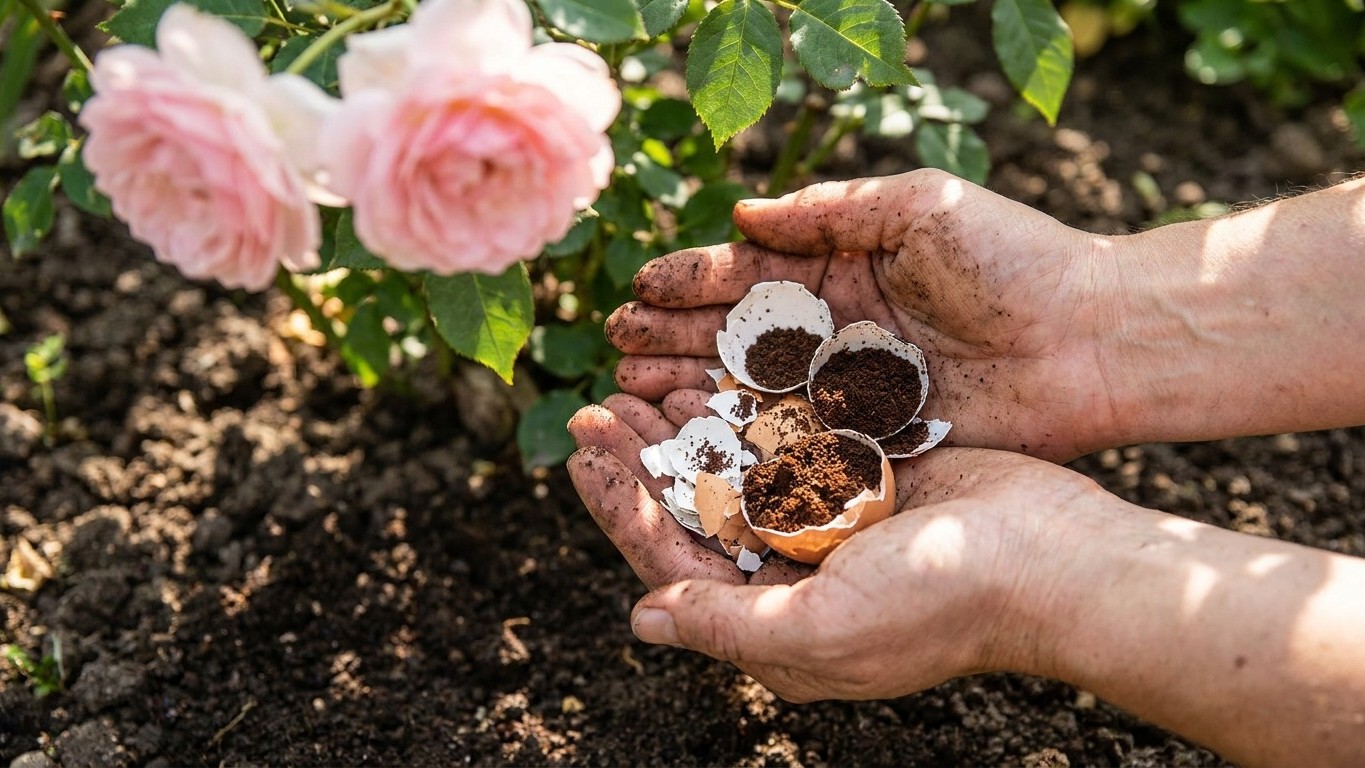
Every week, millions of Americans peel their onions, crack their eggs, and toss those scraps straight into the trash. The bin fills up, gets emptied, and nothing changes, not in the kitchen, and certainly not in the garden. But your neighbor with the spectacular roses every June? She’s been doing something radically different with the same leftovers, and the science behind it is surprisingly compelling.
The kitchen scrap in question is the humble eggshell, paired with coffee grounds and vegetable peelings. Eggshells are composed of 96 percent calcium, making them a valuable source of nutrients for plants. Roses, as it turns out, are calcium-hungry plants. Plants that love calcium, like roses and African violets, benefit most from this approach. And yet every morning, most of us crack two eggs into a pan and send those shells directly to landfill — the plant equivalent of tossing free fertilizer into a black hole.
Key takeaways
- A common kitchen scrap buried in May transforms rose soil in ways most gardeners never discover
- The underground process that happens after burying these scraps involves earthworms, microbes, and nutrient cycles most people have never heard of
- Your neighbor’s rose garden success isn’t luck—it’s a reproducible method that works because of specific soil science
What Happens Underground When You Bury Kitchen Scraps
The method your neighbor is using has a name: trench composting. It allows gardeners to bury almost any food scraps right in any garden area, where they compost underground and provide the soil with more nutrients while reducing overall waste. No bin. No turning. No complicated layering system. You dig, you bury, you cover. That’s it.
The real Transformation happens beneath the surface. Kitchen scraps contain essential nutrients such as nitrogen, phosphorus, potassium, calcium, and trace minerals that are slowly released into the soil as they decompose. More importantly, they feed beneficial microbes and fungi, which are key to transforming lifeless dirt into healthy, living soil. This isn’t just about fertilizer, it’s about rebuilding an entire ecosystem at the roots of your plants.
As earthworms burrow through the soil, they stimulate soil microbial activity. As they eat organic matter and soil particles, they mix up the soil in a beneficial way. Charles Darwin calculated that worms can turn over the top 6 inches of soil in 10 to 20 years. By fragmenting organic material and mixing the soil, earthworms increase soil porosity and aggregation, which significantly increases the water-holding capacity of the soil. Bury the right scraps in May, and you’re essentially sending an engraved invitation to every earthworm in the neighborhood.
When trench composting is used in a garden, it encourages the development of deep, water-conserving root systems in the plants. It also creates an underground band of nutrient-rich humus that all plants will love. For roses, which need consistent moisture and a well-aerated root zone, this is precisely the environment that separates a good bloom year from a spectacular one.
The Best Kitchen Scraps for Roses (and the Ones to Skip)
Not all kitchen waste is created equal when it comes to roses. Eggshells lead the pack. By slowly releasing nutrients into the soil, eggshells avoid the risk of over-fertilizing plants. Crush them finely before burying, the finer the powder, the faster microbes can break them down and make the calcium available. Crushed eggshells applied around roses strengthen their stems and enhance bloom production.
Coffee grounds are the second workhorse. Coffee grounds are something most people throw away daily, but they can be very useful for composting. They make a great addition in areas of acid-loving plants like roses, blueberries, and hydrangeas. They also naturally detract slugs and snails while attracting earthworms. A double benefit: better soil and fewer pests.
Vegetable peelings, carrot tops, potato skins, onion papery layers, add diversity to the mix. Onion and garlic skins, when layered into your compost area, provide potassium, phosphorus, and nitrogen. And burying onion skins around each rose bush in the fall or spring can produce the earliest and most abundant first flush of bloom.
The scraps to avoid? Meat, dairy, oils, and diseased plants can attract pests and introduce pathogens. Stick to plant-based material and you’ll have none of the smell and all of the benefit. What about banana peels, a viral garden hack? The science is more cautious here. Fresh peels can create anaerobic conditions in soil, leading to root rot, and the thick, waxy coating on banana peels resists breakdown and can create barriers that prevent water and air movement in soil. If you want to use banana peels, chop them finely and add them as part of a broader mix, rather than burying large pieces whole.
Why May Is the Right Moment to Do This
Timing matters more than most gardeners realize. Rose nutrition needs are highest during active growth periods in spring and early summer. Burying scraps at the base of your roses in early-to-mid May positions the nutrients to become available right as the plant is pushing toward its first flowering flush. The soil is warming, microbial activity is ramping up, and roots are actively growing, exactly the conditions that accelerate decomposition and nutrient uptake.
Trench composting can help nearby plants develop water-conserving root systems. It is odorless and invisible since all the waste is buried underground. All you have to do is dig a hole, fill it with organic waste, and cover it up with soil. Earthworms and other organisms in the soil do the rest of the work. For urban gardeners who can’t keep a compost pile, this is a practical, neighbor-friendly solution.
The practical method is straightforward. For trench composting, dig a trench or large hole about 12 inches deep, add 4 to 6 inches of materials that will decompose, such as kitchen scraps, grass clippings, and plant prunings. Once the trench has the materials in it, cover it with soil to fill the hole. In a few weeks, the soil will be nicely amended with broken-down organic and food waste. For an established rose bush, you can simply dig 3 to 4 small holes around the drip line, where the roots spread, and distribute your scraps among them rather than disturbing the main root mass with a long trench.
The Bigger Picture: Soil Health Over Quick Fixes
Here’s what separates the gardeners with genuinely thriving roses from those who chase one magic trick after another: they think in terms of soil biology, not just nutrients. Compost improves soil structure, increases nutrient retention, and promotes beneficial microbial activity in the soil. A single bag of synthetic fertilizer will feed your roses this season. A consistent habit of burying kitchen scraps will change what the soil fundamentally is over the next three to five years.
A well-moistened, organically rich soil warms up faster in spring, giving roses a stronger start. The organic-rich materials used for trench composting amend the soil by creating a better structure, improving drainage and water retention. That means fewer watering crises in July heat, fewer fungal issues when August brings humidity, and stronger canes heading into winter. The improvement compounds, year after year.
One practical note worth knowing: in the US, 24% of landfill space is taken up by food waste. The average American household produces roughly 300 pounds of food scraps per year, material that, instead of generating methane underground in a landfill, could be silently building richer soil in your own backyard. Your neighbor figured this out. Her roses just happen to be the most beautiful evidence of it.
Sources : gardeningknowhow.com | positivebloom.com