You plant too early. That’s it. That’s the mistake. Every spring, millions of home gardeners, from first-timers in Florida to seasoned growers in Oregon, rush their seeds into the ground the moment temperatures creep above freezing, convinced that getting a head start means getting more. It doesn’t. What it Actually means is weaker plants, stunted roots, and a summer harvest that never quite delivers on its March promise.
Key takeaways
- Millions of gardeners plant warm-season crops weeks too early, triggering a cascade of invisible damage that surfaces months later
- Cold soil doesn’t just slow growth—it causes nutrient lockout and permanent cellular damage in heat-loving plants like tomatoes and squash
- A single soil thermometer and a shift in March strategy can unlock 4-6 weeks of extra growing season and dramatically boost your yield
The Seduction of Early March Warmth
There’s something almost cruel about how good March feels after a long winter. A 60-degree afternoon, the first robin on the fence, soil that smells alive again, your body tells you to go. Garden centers lean into this feeling hard, stocking shelves with tomato seedlings before most regions have seen their last frost. And that’s the trap.
Soil temperature is not the same as air temperature. A sunny 65-degree day can still mean soil that hovers around 45 degrees, cold enough to shock warm-season crops like tomatoes, peppers, cucumbers, and squash into a kind of suspended misery. They don’t die outright. They just stall. Roots fail to develop properly. The plant spends its energy surviving rather than growing. By the time a neighbor who waited three more weeks puts their tomatoes in the ground, your early starters are often the same size, or smaller, having lost precious momentum during those cold soil weeks.
The USDA soil temperature maps are publicly available and genuinely useful here. Most warm-season vegetables want soil consistently at 60 degrees Fahrenheit at a depth of 2 inches before going in. Not the forecast high. Not the afternoon reading. Consistently 60, day and night.
What Actually Gets Damaged (and How)
Cold soil stress is cumulative and sneaky. A pepper seedling planted too early might look fine for the first week, then yellow at the lower leaves. That yellowing is a sign of nutrient lockout, phosphorus, in particular, becomes nearly unavailable to plants in cold soil. You might reach for fertilizer, thinking you’ve under-fed. You haven’t. The soil temperature is simply too low for the plant to absorb what’s already there.
With squash and cucumbers, the risk compounds. These crops are not just cold-sensitive, they’re cold-traumatized. A single night below 50 degrees can cause what growers call “chilling injury,” which disrupts cell membranes and permanently impairs the plant’s ability to fruit later in the season. You’ll still get a plant. You might even get flowers. But the yield? Disappointing in ways that feel mysterious, because by July, the cold snap of March feels like ancient history.
Root vegetables tell a different story. Carrots, beets, and radishes actually benefit from cool soil and can handle a frost. The March mistake with these crops is the opposite: overthinking it, waiting too long, planting them in warm May soil when they’d have thrived three weeks earlier. Know your crop. Cold-season and warm-season vegetables operate on entirely different timelines, and treating them the same is where generalized gardening advice tends to fail people.
The Smarter March Playbook
March is not a wasted month, it’s just misunderstood. The best thing you can do in early March is start warm-season crops indoors, under grow lights or on a bright south-facing windowsill. Tomatoes need 6 to 8 weeks of indoor growth before transplanting. Peppers want 8 to 10 weeks. Starting them now — not buying nursery starts in April, but actually growing from seed, gives you control over timing, genetics, and plant strength that store-bought seedlings simply can’t match.
Meanwhile, outside, March is prime time for cold-hardy crops. Spinach, kale, Swiss chard, peas, and lettuce can go directly into the ground once soil is workable, even if frosts are still in the forecast. These plants don’t just tolerate cold, a touch of frost actually sweetens spinach and certain kale varieties, increasing their sugar content as a natural antifreeze response. That’s the kind of nuance that separates a genuinely productive garden from one that looks busy but underdelivers.
A cold frame or low tunnel made from wire hoops and row cover fabric extends your effective growing season by four to six weeks without any heating cost. For less than $30 in materials, you can grow salad greens through March in USDA zones 5 and 6 that would otherwise sit waiting. The money and effort that people pour into expensive early tomatoes would often be better spent on this kind of infrastructure, the returns are real and immediate.
How to Calibrate Your Actual Last Frost Date
The last frost date on every planting calendar is a statistical average, not a guarantee. It represents the median date of last spring frost in your area over a long period, which means half the time, the last frost comes after that date. For most of the continental United States, that buffer matters enormously.
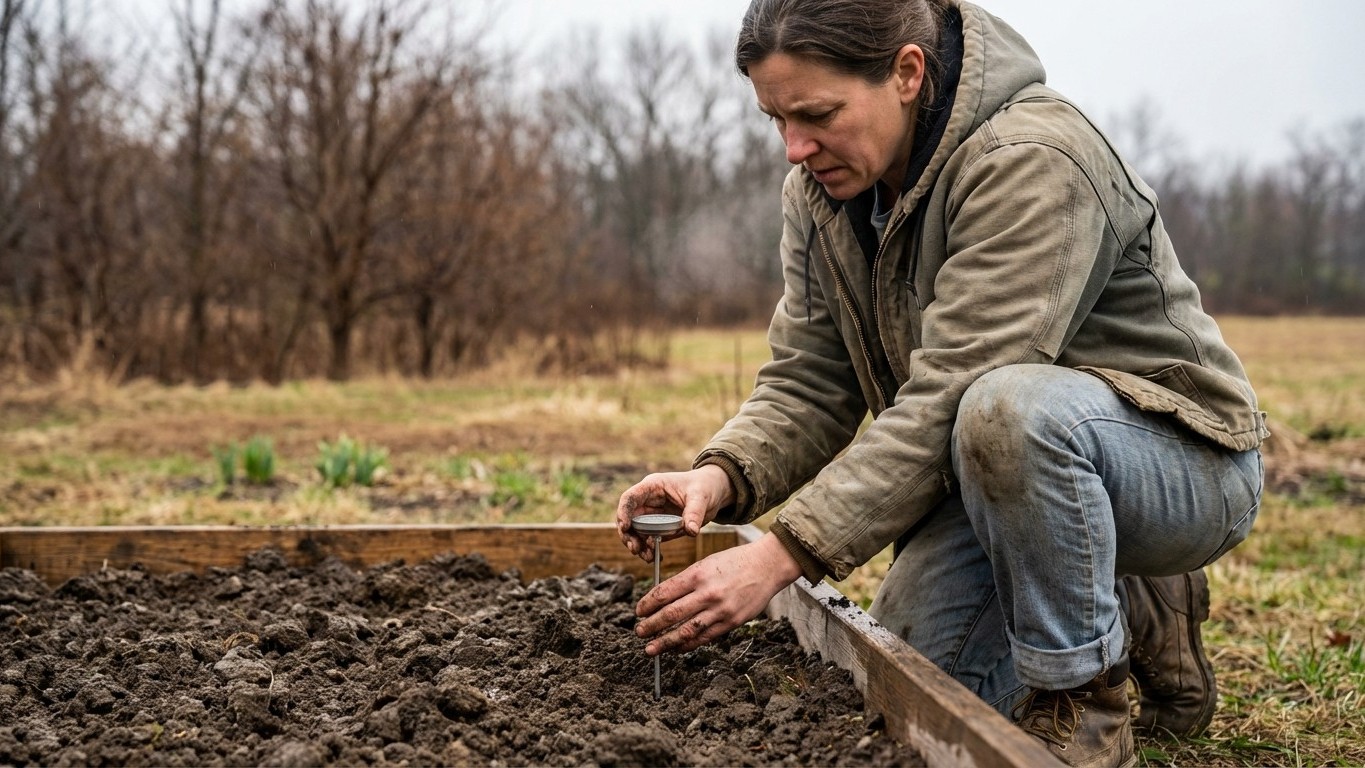
A $15 soil thermometer is one of the more useful purchases a home gardener can make. Take readings at 8 a.m. for a week straight. If the average is consistently below 60 degrees, your warm-season crops are not ready to go out, no matter what the calendar says. If it’s consistently above, and the 10-day forecast shows no overnight temps below 45, you’re genuinely in the clear.
Local extension services, run through land-grant universities in most states, publish region-specific planting calendars that are far more precise than anything in a national gardening magazine. They account for microclimates, elevation, and local frost patterns that a generalized chart simply can’t capture. They’re free, they’re evidence-based, and almost nobody uses them.
The real question heading into this growing season isn’t whether you’ll plant, it’s whether you’ll plant with patience. Because the gardener who waits three more weeks, who lets the soil warm properly, who starts seeds indoors with intention rather than buying whatever’s available at the hardware store in early March — that gardener is the one picking tomatoes in July while the impatient planter is still waiting for a harvest that stalled before it ever really started.