
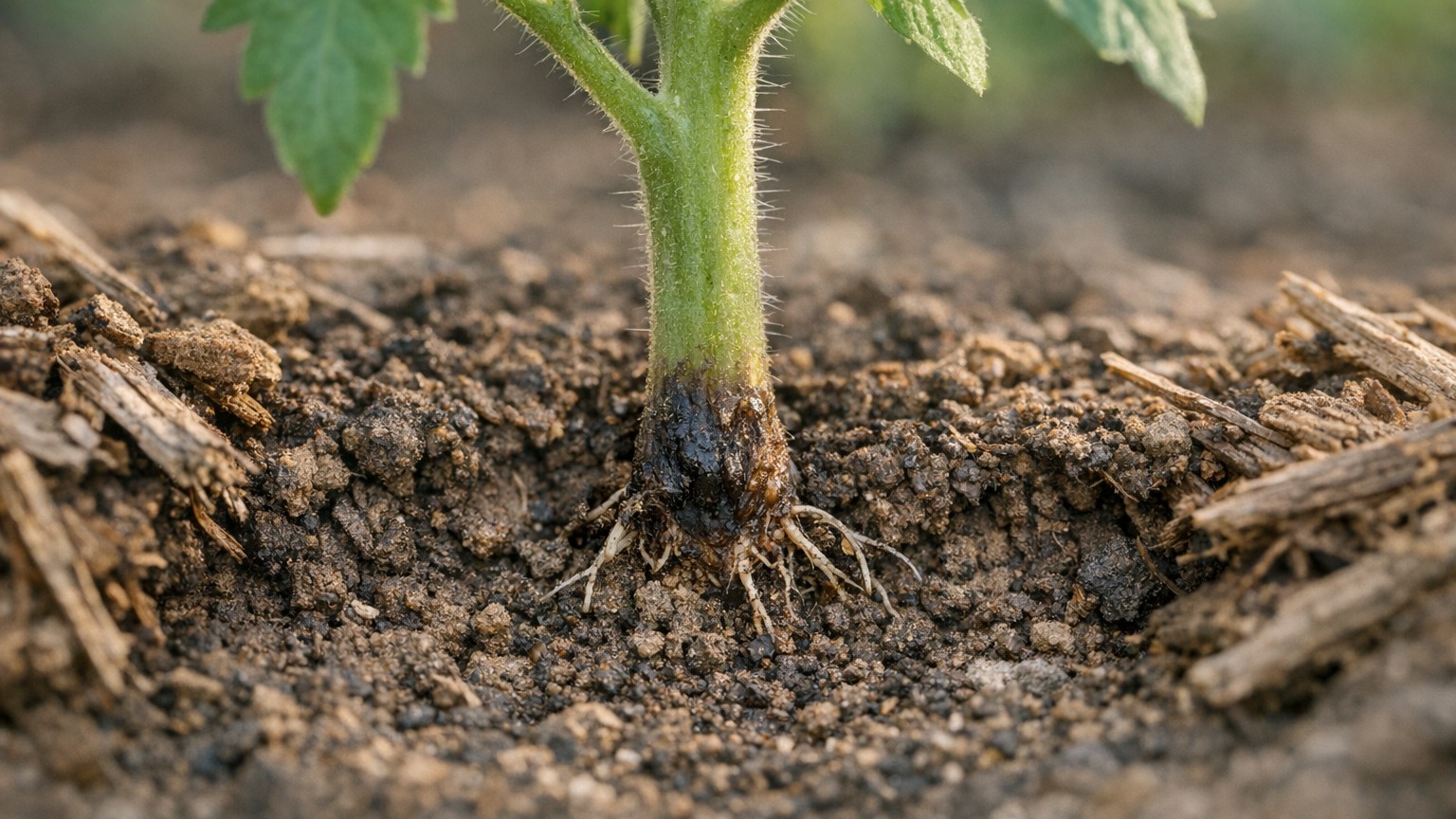
Grass Clippings Are one of the most abundant free mulching materials a home gardener has access to, and the instinct to pile them around tomato plants makes perfect sense on paper. They cool the soil, suppress weeds, and break down into nitrogen-rich organic matter. The logic holds, right up until the moment you pull back a thick mat of clippings and find the base of your tomato stem soft, discolored, and already giving way to rot.
That discovery is more common than most gardeners want to admit. And the cause isn’t a mysterious fungal villain, it’s the mulch itself, applied in a way that turned a good idea into a slow-moving problem.
Key takeaways
- Fresh grass clippings compact into an airless, moisture-trapping mat that reaches 130°F—creating ideal conditions for fungal pathogens to attack tomato stems
- The ‘more is better’ mistake catches experienced gardeners: one to two inches is the safe limit; beyond that, you’re composting in place around a living plant
- A two-to-three-inch bare collar around the stem base, combined with thin layering and partial drying, solves the problem entirely
What happens inside a thick layer of fresh grass clippings
Fresh grass clippings are roughly 80% water by weight. Stack them several inches deep and they don’t just sit there like bark chips or straw. They compact almost immediately, forming a dense, airless mat that traps moisture rather than regulating it. Within a day or two in warm weather, the interior of that layer heats up to temperatures that can exceed 130°F, the same thermophilic fermentation that makes a compost pile steam in the morning. That heat and moisture pressed directly against a tomato stem creates conditions where fungal pathogens, particularly those responsible for collar rot and damping-off disorders, find exactly what they need to establish.
The specific culprit in most home garden cases is Pythium or Rhizoctonia solani — soil-borne organisms that are almost always present in garden beds, dormant and harmless under normal conditions. Persistent moisture at the soil line is what activates them. A thick mat of wet clippings pressed against the stem for days at a time is essentially a welcome mat.
The “more is better” trap that catches experienced gardeners too
There’s a particular irony here: the gardeners who suffer most from this mistake are often the ones who’ve read up on mulching. They know a 3-inch layer is good, so they reason that 5 or 6 inches must be better, especially during a heat wave when keeping soil temperatures stable feels urgent. Tomatoes do benefit from mulch, research from the Penn State Extension and other university horticulture programs consistently shows that mulched tomatoes produce more fruit and withstand drought stress better than unmulched plants. But the operative word in every recommendation is appropriate depth, not maximum depth.
With grass clippings specifically, that depth is shallower than most people expect: one to two inches is the practical ceiling before the compaction problem takes over. Beyond that, you’re no longer mulching, you’re composting in place, around a living stem that has no tolerance for that environment.
The distance from the stem matters just as much as the depth. A “mulch-free collar”, a gap of at least two to three inches between any mulch material and the base of the plant — gives the stem room to stay dry and allows airflow to reach the soil surface. Most mulching guides mention this rule for woody shrubs and trees. Fewer emphasize it for tomatoes, which is part of why the mistake keeps repeating itself across gardens every summer.
How to use grass clippings correctly without losing the benefits
None of this means grass clippings belong in the compost bin rather than the garden. They’re genuinely useful, and abandoning them entirely would be wasteful. The fix is in the application method.
Let freshly mowed clippings dry on the lawn for a day before using them as mulch. Even partial drying reduces moisture content enough to prevent the rapid compaction that creates anaerobic conditions. Apply them in thin layers, half an inch to one inch at a time, and allow each layer to settle and dry before adding another. This approach also prevents the matting problem that can actually repel rainfall, sending water running off the surface rather than penetrating to the roots below.
If you prefer a deeper mulch layer around your tomatoes (which does provide real benefits in hot climates), mixing grass clippings with a coarser material like straw or wood chips gives the layer structure. The larger particles create air channels that prevent the compaction-fermentation cycle from starting. A 50/50 mix by volume, applied at three inches, behaves very differently from three inches of pure clippings.
Gardeners growing tomatoes in humid regions or in years with above-average rainfall should be especially conservative. Wet soil combined with wet mulch is a compounding risk, and tomato stems are more vulnerable than most vegetables, the stems stay close to the soil surface rather than elevating quickly the way peppers or eggplants do.
Reading the damage before it becomes a loss
Catching collar rot early changes the outcome significantly. The earliest signs are a darkening or slight softening of the stem tissue right at the soil line, sometimes accompanied by a faint smell when the mulch is disturbed. At that stage, pulling back all mulch, allowing the area to dry out completely, and applying a light dusting of agricultural sulfur or a copper-based fungicide can often arrest the problem before it becomes fatal to the plant.
By the time a stem turns brown, collapses at the base, or the plant wilts despite adequate soil moisture, the damage is usually too advanced to save. The plant isn’t suffering from drought, it’s suffering from a severed connection between roots and leaves, and no amount of watering will reverse that.
One detail that rarely makes it into basic gardening guides: tomatoes buried deep at planting time, with several inches of stem underground to encourage additional root development, are actually somewhat more resilient to collar rot than shallowly planted ones, because the critical stem zone sits lower and is less directly affected by surface mulch. It’s a small buffer, not a workaround for bad mulching habits, but worth knowing for anyone who’s had this problem more than once.