
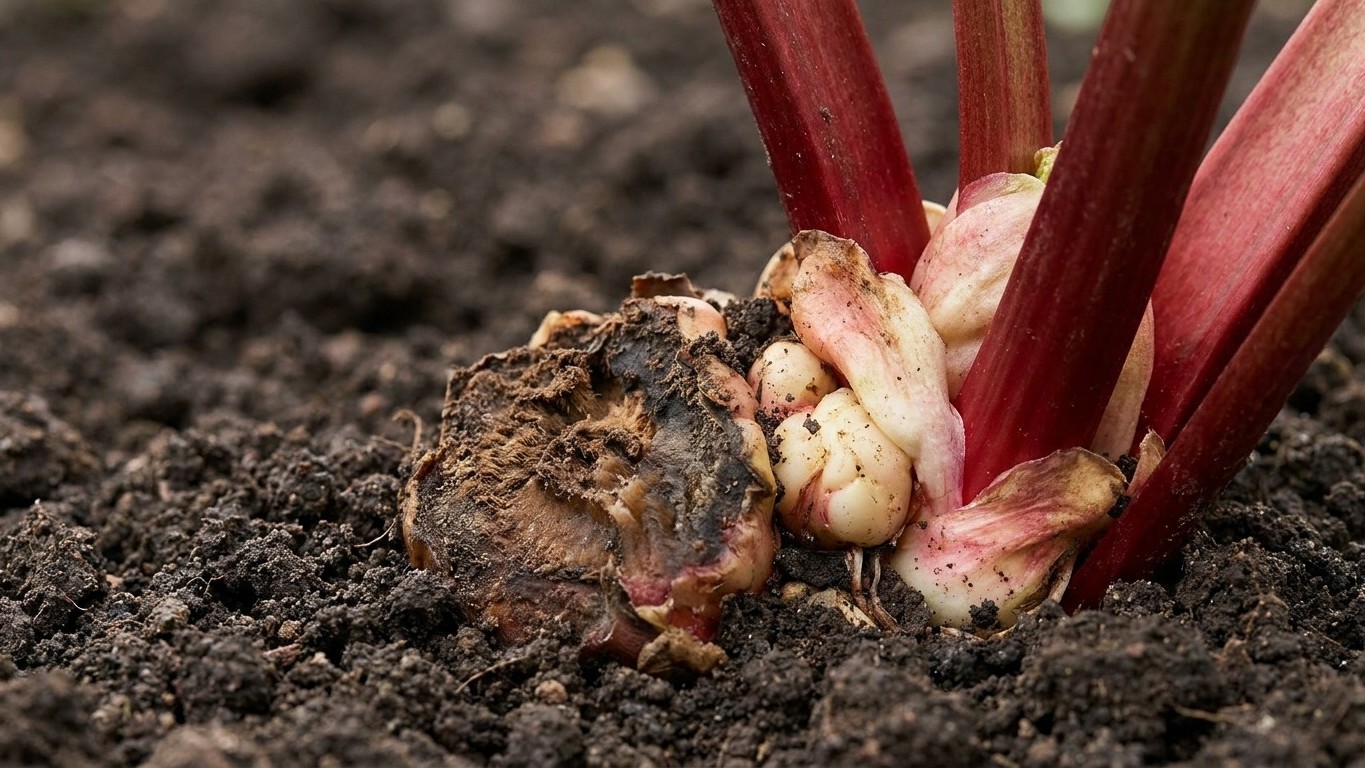
Rhubarb is one of those plants that practically takes care of itself, until it doesn’t. For three seasons, the crown in my garden produced thick, ruby-red stalks without much fuss. Then I started “managing” it more aggressively, cutting stems clean at the base with a sharp knife every May. By midsummer, the plant looked tired. By late July, I noticed the crown was soft to the touch, darkening from the center out. What followed was a slow collapse that no amount of watering or fertilizing could reverse.
The culprit wasn’t disease. It wasn’t pests. It was the knife.
Key takeaways
- A single harvesting choice made in May can trigger invisible crown rot that becomes visible and irreversible by late July
- The difference between a knife cut and a natural pull determines whether water drains away or pools in the wound
- Crowns can be thriving one month and completely collapsed the next—but the damage started weeks earlier
Why the harvesting method matters more than you think
Most gardening guides tell you to pull rhubarb stalks rather than cut them, but few explain the mechanics behind that advice. When you slice a stalk at the base with a blade, you leave a flat, open wound on the crown. That exposed tissue becomes an entry point for moisture, soil bacteria, and fungal spores, exactly the kind of microorganisms that cause crown rot. The problem compounds quickly in warm, wet conditions, which is precisely what late spring and early summer deliver in most of the U.S.
Pulling the stalk works differently. You grip it low, near the base, and apply a gentle outward twist combined with downward pressure. The stalk separates cleanly from the crown at its natural attachment point, leaving a concave scar that sheds water rather than collecting it. The plant’s own tissue seals the wound faster because the cell structure tears along a natural plane rather than being sliced across. Think of it like a perforated page versus one cut with scissors, one breaks where it’s designed to give way, the other leaves a raw edge.
Rhubarb crowns are fleshy and dense, sitting at or just below soil level. They store enormous reserves of energy for the plant. Any damage to that tissue isn’t just a surface wound, it’s a direct hit to the plant’s energy bank. Crown rot, typically caused by Phytophthora or Rhizoctonia fungi, can move through a compromised crown within a few weeks during warm weather, and by the time you see visible decay, the damage is usually too deep to reverse.
The May harvest window and why timing compounds the risk
May is peak harvest season for rhubarb in most temperate zones, which makes it the month when gardeners are most likely to be cutting frequently. The stalks are coming in fast, the plant looks vigorous, and it’s tempting to harvest aggressively. But May is also when soil temperatures are rising rapidly and moisture levels remain high after spring rain. That combination creates near-perfect conditions for fungal growth if there’s any open tissue on the crown.
There’s another wrinkle specific to May harvesting: the plant is still actively pushing energy downward into the crown to support root development for the coming summer. A knife cut at this growth stage doesn’t just wound, it interrupts a vascular pathway that the plant is actively using. Repeated cuts across multiple stalks can stress the crown enough to reduce its immune response, making it even more vulnerable to opportunistic pathogens that are already present in the soil.
A useful rule: never harvest more than one-third of the plant’s stalks at a single session, regardless of method. Rhubarb needs its leaves to photosynthesize and replenish the crown’s energy reserves. Strip too many at once and you slow recovery, even with perfect harvesting technique.
What to do if you’ve already been cutting
If you’ve been using a knife and your plant looks healthy, don’t panic, some crowns handle it better than others depending on variety, soil drainage, and local climate. But switching to the twist-and-pull method now will meaningfully reduce your risk going forward. If the crown feels soft or you notice a dark, water-soaked discoloration at the base of any stalks, act quickly.
Dig up the crown and inspect it. Healthy rhubarb crown tissue is firm and pale to cream-colored inside. Rotting tissue will be brown, gray, or black and will smell distinctly musty. If rot is limited to one section, you can sometimes cut it away with a sterilized knife, dust the exposed tissue with powdered sulfur or a copper-based fungicide, and replant in a fresh location with better drainage. If the rot has spread to the center, the plant is lost.
Going forward, improving drainage around your rhubarb is the single most effective preventive measure. Crown rot is almost always worse in heavy clay soils or low spots where water pools. Raised beds work well for rhubarb for exactly this reason. Avoid mulching directly against the crown, keep a small gap of a few inches so air can circulate around the base. And resist the urge to water the crown itself; direct water to the outer root zone instead.
The bigger lesson hiding in the crown
Rhubarb has been cultivated for well over a thousand years, it appears in Chinese medicinal records dating back to 2700 BCE — and traditional harvesting methods developed long before modern garden tools made cutting feel more precise and controlled. The twist-and-pull technique isn’t folk wisdom dressed up as gardening advice. It reflects a genuine understanding of how the plant grows and seals its own wounds. The knife feels cleaner, more professional. The reality is the opposite: it bypasses the plant’s own healing architecture entirely.
One detail worth knowing before next May: established rhubarb crowns that are at least three years old are significantly more resilient than younger plants. If your plant is in its first or second year, skip Harvesting almost entirely, regardless of method, the crown needs all its energy to develop a root system strong enough to support decades of future harvests. The payoff for that patience is a plant that, handled correctly, can produce abundantly for twenty years or more.