
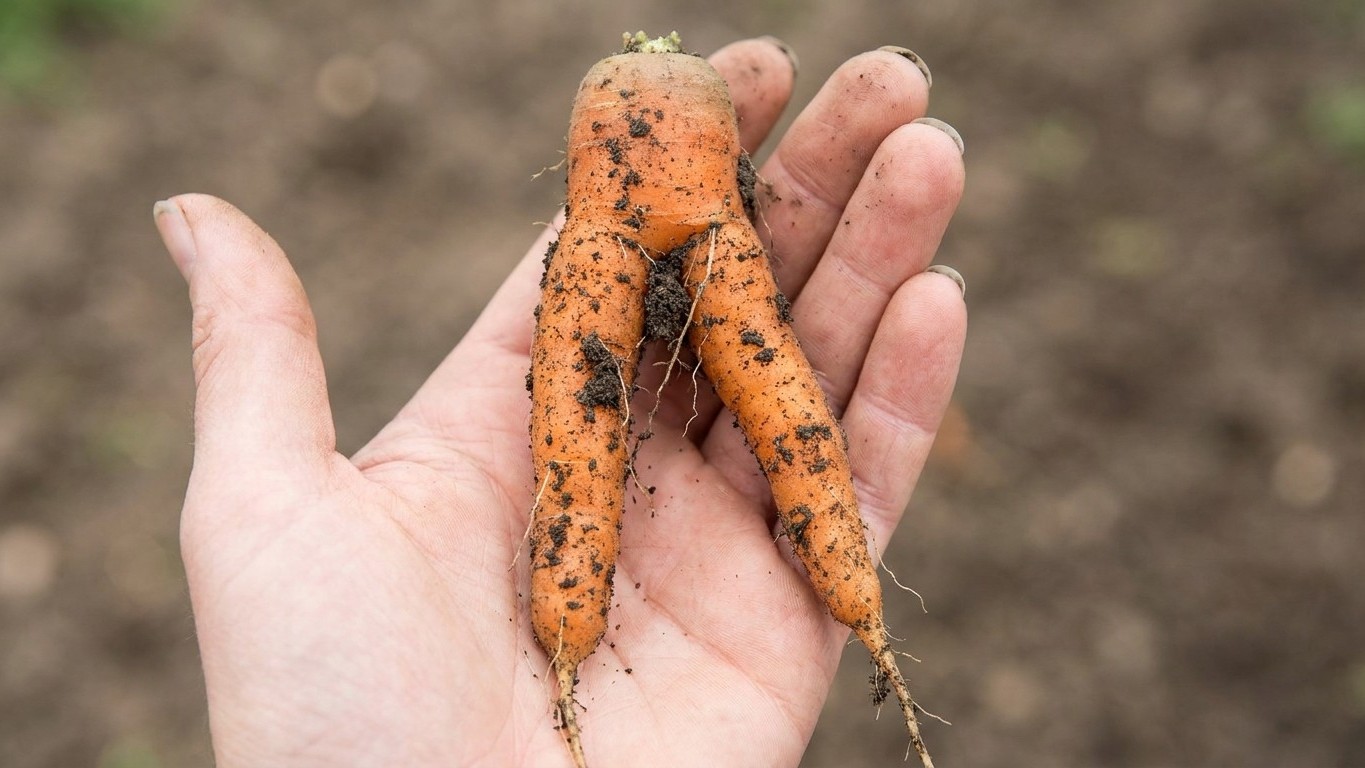
Forked carrots are almost never a mystery, once you know what causes them, the evidence is written right there in the roots. For years, a common thinning method turned out to be quietly sabotaging harvests, and the culprit wasn’t the soil, the variety, or the weather. It was the act of pulling out neighboring seedlings by hand.
Key takeaways
- A thinning mistake you’ve likely been making for years has a devastatingly simple cause buried underground
- The damage happens in seconds, at a depth you can’t see, to a part of the root so delicate it changes the entire plant’s destiny
- The fix is almost absurdly easy—so easy that experienced gardeners resist it because it feels wrong
What Actually Happens Underground When You Pull
A carrot’s taproot is not a rigid spike. In its first few weeks, it’s soft, gelatinous, and extraordinarily sensitive to pressure. When you grab an adjacent seedling and tug it upward, the soil doesn’t just release that one plant, it shifts. The disturbance travels laterally through the growing medium, and the delicate tip of the carrot you intended to keep gets bumped, compressed, or partially severed from its downward path.
That tip, called the radicle, is where everything matters. It’s the growing point that determines whether the root will grow straight and singular or split and compensate. Damage it even slightly at two or three weeks old, and the carrot doesn’t stop growing. It branches. Two or three side roots take over where the main root was supposed to dominate, producing that classic two-legged fork that looks charming on Instagram but is a nightmare to peel.
The University of Minnesota Extension has documented this phenomenon in detail, noting that physical disturbance during early root development is one of the primary triggers for forking in home gardens, alongside compacted or stony soil, fresh manure in the bed, and uneven watering.
The Right Way to Thin Carrots (and Why It Feels Wrong at First)
Scissors. That’s the answer, and it sounds almost absurdly simple. Snipping the unwanted seedlings at soil level instead of pulling them eliminates the underground disruption entirely. The cut seedling dies, its roots decompose, and the surviving carrot next door never feels a thing. No soil shift, no radicle damage, no forking from the thinning process itself.
The psychological hurdle is real, though. Gardeners, especially those who’ve been doing this for decades, have a hard time leaving roots in the ground. There’s an ingrained sense that those dead roots will cause rot, harbor pests, or compete with the survivors. The reality is the opposite: shallow carrot seedling roots decompose within days in active garden soil, and the organic matter actually feeds the microbial community around your remaining plants.
Timing is the other variable people underestimate. Thinning should happen when seedlings reach about two inches tall, but it needs to happen in two stages. The first pass brings spacing to roughly one inch apart. Two weeks later, a second pass brings it to the final two-to-three inch spacing. Doing it all at once in a single aggressive session concentrates the disturbance, even with scissors, the soil still gets jostled by tools and hands moving through a dense cluster.
Other Forking Culprits That Often Get Blamed Instead
Fresh compost or manure added just before planting is the most frequently cited cause of forking in gardening forums, and it does genuinely cause problems. The logic is straightforward: nitrogen-rich organic material encourages the carrot to produce lateral growth rather than driving its taproot deep in search of nutrients. The root finds abundance right at the surface and spreads sideways. Aged compost worked into the bed several months before planting avoids this entirely.
Rocky or clay-heavy soil creates a different version of the problem. When the taproot hits an obstacle it can’t push through, it splits around it. Some gardeners solve this with raised beds filled with sandy, deeply loosened growing mix. A common trick among serious carrot growers is to use a steel rod to make 12-inch-deep holes in the bed, then fill those holes with a sand-and-compost blend before sowing, giving each root a straight, obstacle-free channel to follow downward.
Inconsistent watering produces stress-forking too, particularly when a dry spell follows initial germination and then heavy rain (or irrigation) arrives suddenly. The taproot, which had slowed or partially stalled during the dry period, resumes growth unevenly, and branching follows. This is why carrot beds benefit from a consistent, moderate moisture level rather than the feast-or-famine cycle that works fine for tomatoes.
What Forked Carrots Actually Tell You About Your Garden
A harvest full of forked carrots is essentially a soil audit. The shape of each root records what it encountered on the way down. A sharp Y-fork at about three inches depth suggests a rock, a clod, or a thinning disturbance at roughly three to four weeks of growth. Multiple branches starting further down indicate the soil became compacted or dense at that level. A gentle curve rather than a fork usually points to inconsistent moisture rather than physical obstruction.
Forked carrots are completely edible, of course. The flavor is identical, the nutrition unchanged. The real loss is practical: they take three times longer to wash, peel, and prep because the mud packs into every crevice, and they don’t store as efficiently since the irregular shape creates pressure points that bruise in storage. For anyone growing carrots to actually use in the kitchen across winter months, uniformity isn’t vanity, it’s a functional goal.
One more detail that rarely gets mentioned: variety selection matters more than most beginner guides admit. Imperator-type carrots, those long classic types that need 10 to 12 inches of loose, perfect soil, are unforgiving of any disturbance. Chantenay and Danvers types, which are shorter and stockier by nature, tolerate average soil conditions and minor thinning imperfections far better. If your garden has a shallow topsoil layer or a history of forking problems, switching variety before changing anything else is often the fastest fix, results visible at the very next harvest.