
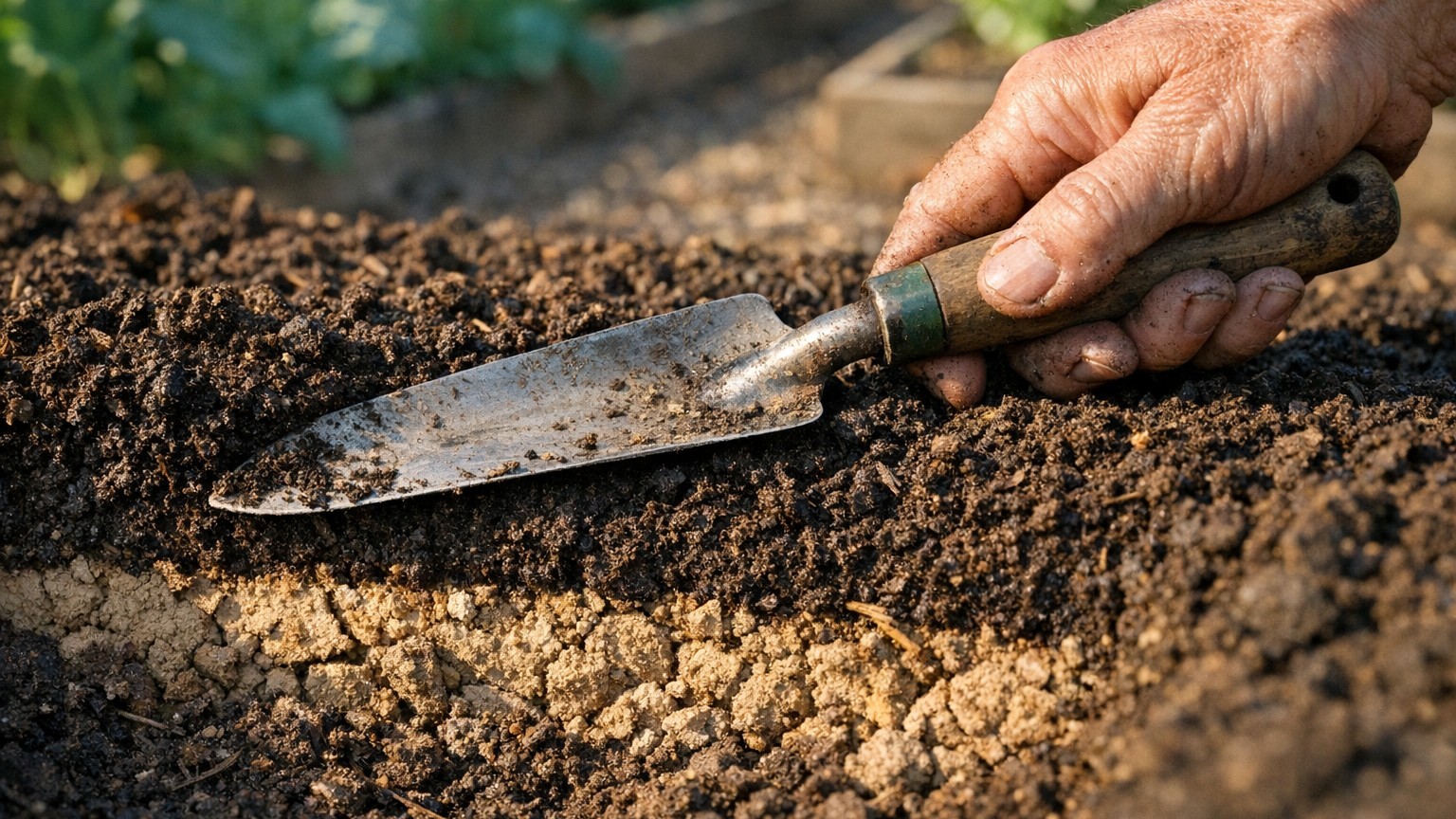
Every evening, right on schedule: watering can in hand, a slow pass over the tomatoes, the zucchini, the lettuce. Ritual, almost meditative. And yet, by mid-July, the plants looked exhausted, leaves yellowing, stems drooping despite the soil surface always appearing damp. The day a trowel went six inches down into the bed, the answer was right there in the crumbly, bone-dry earth below: the water had never really arrived.
Key takeaways
- Daily evening watering creates an invisible problem hiding just inches below the soil surface
- Plants become ‘lazy’ with shallow roots when water is always nearby, making them fragile during heat
- The timing of your watering matters as much as how much water you use—and most gardeners choose the worst possible time
The Illusion of “Wet Soil”
The surface is a liar. A quick evening pass with the hose dampens the top inch or two, enough to darken the soil and reassure the eye, but that moisture evaporates overnight or gets trapped in the upper crust, never reaching the root zone where plants actually drink. When you apply small amounts of water frequently, only the top inch or two of soil becomes moist, and plant roots, following the water, concentrate in that shallow zone. The plants, chase what you give them.
Daily watering often creates shallow root systems because the moisture stays near the surface of the soil. Plants respond by growing roots only where the water is easiest to reach. This creates weaker plants that dry out quickly during hot weather and become more dependent on constant watering. A vicious cycle, disguised as attentiveness.
The counterintuitive truth? When we water our plants too often, they can become lazy, they don’t have to dig deep for water because it is being delivered on a regular basis. Plants that get watered regularly tend to have shallow root systems compared to those that are allowed to experience occasional dry spells. These shallow roots struggle to reach water during droughts, making the plants more vulnerable to stress.
Why Evening Is the Wrong Time : Even When It Feels Right
Coming home after work, the garden gets watered at 7 pm. Logical. Convenient. But as one private estate head gardener puts it plainly: “The worst time of day to water your vegetables is in the evening, especially after the sun goes down. Vegetables with thick, hairy leaves and stems hate being wet.”
When water lands on leaves in cool, still evening air, it lingers for hours, creating ideal conditions for spores of powdery mildew, early blight, and botrytis to germinate and infect. Conversely, morning irrigation allows foliage to dry rapidly under rising temperatures and increasing breezes, reducing disease pressure significantly. Think of it as the difference between a towel left damp on the bathroom floor versus one hung in the sun.
There’s a physiological angle too. Master gardener Ginny Rosenkranz of the University of Maryland College of Agriculture explains that “like all athletes, plants that bloom and produce fruit need to hydrate and pull in the nutrients needed to grow in the early morning,” so “the plants can move the nutrients to the areas that need it before they shut down when temperatures get above 85 degrees.” Evening watering arrives too late for the biological workday.
A nuance worth noting: some crops, like brassicas (kale, cabbage, broccoli) and root vegetables (beets, carrots, radishes) — tolerate evening moisture better than fruiting vegetables, so the rule isn’t absolute. But for tomatoes, peppers, cucumbers, and squash? Morning is non-negotiable.
What Actually Works: Deep, Infrequent Watering
The fix sounds almost too simple. For established plants, watering two to three times per week with deep soaking proves more effective than daily light sprinklings. This approach trains roots to seek water deeper in the soil profile, improving drought tolerance. Fewer sessions, more water per session, delivered slowly enough to actually penetrate.
Apply water slowly and thoroughly, allowing it to penetrate 6 to 8 inches into the soil for most vegetables and herbs. A simple test: after watering, push a trowel or a finger into the bed. If the moisture stops at two inches, you haven’t watered, you’ve just misted.
The symptom confusion that traps so many gardeners is also worth untangling. More harm and damage is done to vegetable plants by overwatering than by under-watering, and the reason most gardeners never realize it is that the symptoms are identical. Wilting, yellowing, brown leaf edges, stunted growth: every one of these signals can mean too much water just as easily as too little. When roots sit in soggy soil, oxygen is displaced, the roots suffocate and die, then lose their ability to deliver water to the plant, which promptly wilts, the gardener sees wilting and waters more, and the plant dies faster. The solution isn’t more water. It’s the right kind of diagnosis.
Before watering anything, push a finger one to two inches into the soil. If the soil feels cool and holds together with any moisture, put the hose down and come back tomorrow. If it feels dry and crumbly all the way down, it’s time. This 10-second check replaces every watering schedule ever invented.
The Mulch Factor Most Gardeners Overlook
There’s one change that quietly solves half the problem before the hose even comes out. Mulch helps soil retain moisture, keeps roots cooler, and reduces evaporation from the soil surface. A 2-to-3-inch layer of straw or wood chips laid between plants acts as a shield between the soil and the sun, slowing evaporation dramatically and keeping the root zone consistently moist between waterings.
Gardens without mulch typically require watering every two to three days during hot weather. After applying a 2-to-4-inch layer of quality mulch, the same garden often needs watering only once every seven to ten days. That’s not a minor improvement, that’s reclaiming a significant portion of summer back from the watering can.
Organic mulches like grass clippings, wood chips, and straw function as natural sponges, absorbing excess water and releasing it slowly into the soil. Straw, in particular, works well for vegetable beds: it’s cheap, widely available, decomposes into organic matter over the season, and reduces the splash-back that sends soil-borne disease onto lower leaves. The irony is that most gardeners reach for the hose before reaching for the mulch bag, when mulch is the intervention that makes every future watering session count twice as much.
One detail that rarely makes it into gardening guides: early morning (5:00 to 9:00 a.m.) is the best time to water the garden when using a sprinkler, garden hose, or any other device that wets the plant foliage, but if you’re using drip irrigation aimed at the root zone, the leaves won’t get wet and you can water anytime, with the best time being when the sun is shining and plants most need the water. The method changes the rules of the timing game entirely.
Sources : gardeningknowhow.com | aol.com