
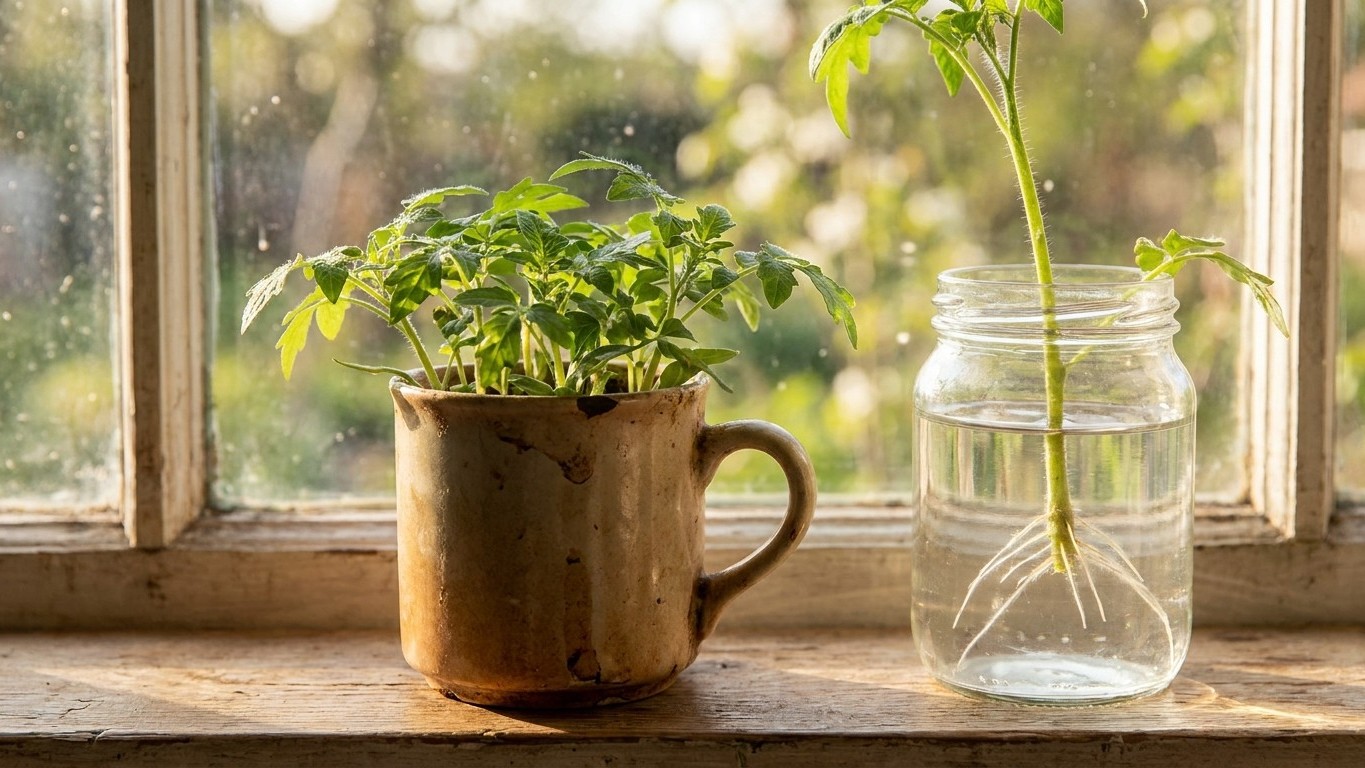
He’d stand there every July evening, a coffee can in hand, dropping in those little green shoots he’d just pinched from between the branches. I used to tease him about it. “Dad, they’re weeds you cut off your own plant. Why are you saving trash?” He’d just shrug and keep filling that can. Turns out he wasn’t hoarding garden scraps. He was building his second tomato harvest before I even understood-what-those-yellow-leaves-with-green-veins-really-meant/”>understood-why-not-a-single-fruit-came/”>understood-why-the-berries-kept-shrinking/”>understood-why-the-roots-were-giving-up/”>understood-what-i-had-really-done-to-the-plant/”>understood-what-was-eating-the-base/”>understood-what-was-still-alive-underneath/”>understood-why-the-fruits-had-stopped-growing/”>understood-why-they-were-dying-of-thirst/”>understood-why-my-tomatoes-were-dying-of-thirst/”>understood-why-nothing-ever-came-up/”>understood-what-it-was-feeding/”>understood-why-the-leaves-were-curling/”>understood-what-i-had-destroyed/”>understood there was such a thing.
Those little shoots are called suckers, and they grow in the crook where a branch meets the main stem, at roughly a 45-degree angle. Tomato plant suckers are small shoots or stems that grow from the leaf axil, the spot where a branch meets the main stem, and they’re also known as secondary stems that will eventually grow into full-sized branches, producing leaves, flowers, and potentially fruit. Left alone, they turn a tidy plant into a jungle. All tomato plants naturally produce suckers, it’s part of how they grow. Most gardening advice treats them as a nuisance to be snapped and discarded. My father saw them differently. He saw free plants.
Key takeaways
- a tomato sucker isn’t waste—it’s a genetic clone of the parent plant waiting to be rooted
- Timing matters: July-rooted suckers skip the slow seedling stage and produce fruit when original plants burn out
- Removing suckers strengthens the mother plant while giving you insurance against disease and summer exhaustion
The Trick Hiding in Plain Sight
What my father knew, and what took me a couple of decades to grasp, is that a tomato sucker isn’t just a stem. It’s a clone waiting to happen. If you’re hoping for a bigger tomato harvest, there’s a surprisingly easy trick that doesn’t involve buying more plants or even starting new seeds: you can grow additional tomato plants from the suckers you remove while pruning. Snip one off, stick it in water, and within a week or two it grows its own roots and becomes a fully independent plant, genetically identical to the one it came from.
The process could not be simpler. You snip a sucker from the main plant using your fingers, or clean garden shears if it’s too thick to pinch, remove the lower leaves, and place the cutting in a jar of water, keeping the leaves above the surface. Roots typically start forming within seven to 10 days. Once those roots reach about an inch long, the little cutting is ready for soil. Once the roots are about an inch long, transplant the sucker into a pot with quality soil and keep it well-watered until established. No seed trays, no grow lights, no waiting eight weeks for germination. Just a jar on the windowsill and a little patience.
What my father never explained (and I never asked) was why he did this specifically in July, not earlier. There’s a reason, and it’s about timing his second act perfectly. Rooting from suckers is an excellent option, as many garden centers don’t carry tomato transplants this time of year and growing from seeds would take too long. A sucker rooted in July skips the slow seedling stage entirely, since it’s already a young branch with established leaf structure, just missing roots.
Why July Is the Magic Month
Here’s the part that changed how I see my father’s coffee can ritual. Rooting suckers in mid-summer, in July or August in many regions, gives you young plants that will be ready to produce fresh fruit well into the fall, after your older, more established plants have started to slow down. By August, the original spring-planted tomatoes are often exhausted, weathered by heat, disease pressure, and months of fruiting. A fresh sucker plant rooted in July arrives right on cue to pick up the slack.
The Georgia extension service put a number on it that surprised me. A late crop of tomatoes set between now and the end of July should start producing about the time tomato plants set early in the season become unproductive. And there’s a disease angle too, one my father, who’d lost more than one plant to blight over the years, understood instinctively. With all the rain some years bring, disease may cause many tomato plants to become unproductive before the end of August. Having backup plants already rooting in a jar isn’t sentimental, it’s insurance.
There’s also a speed advantage nobody mentions enough. Rooted cuttings taken in summer often outpace their spring-started cousins. Since the weather is warm and the soil is already prepared, these cuttings often grow faster than seedlings started in spring. My father’s coffee-can suckers weren’t lagging behind. They were sprinting.
The Other Reason He Was Right
Saving suckers wasn’t only about propagation. Removing them in the first place does something for the mother plant too, and this is where the science gets genuinely useful for anyone tending a backyard patch. Suckers are primarily vegetative and do not produce much, if any, fruit, so leaving them on means the plant devotes energy to growing suckers instead of producing more fruit, while removing them can open the canopy, allowing better air circulation and reducing the potential for foliar diseases.
My father’s tomatoes were staked and disciplined, never the tangled mess I’ve seen in neighbors’ yards by August. That wasn’t luck. Pruning suckers on indeterminate tomatoes gives clear advantages, since the plant focuses less energy on growing new branches and more on producing fruit, which means an earlier harvest. He wasn’t just tidying up. He was redirecting the plant’s entire budget of sunlight and nutrients toward the fruit already hanging on the vine, while quietly banking the surplus material for a second wave.
Not every gardener needs to bother with the coffee can. Suckers are generally worth removing on indeterminate heirloom tomato plants, while determinate hybrid varieties can keep theirs. If you’re growing a compact patio variety that stops growing at a set height, this whole ritual matters far less. But for the sprawling, ever-climbing indeterminate types most home gardeners love, that pile of discarded shoots is basically a second garden asking to happen. My father never wrote any of this down. He just knew that the mess on the ground was actually a head start, and by the time I understood that, his coffee can had already taught me more about patience than any of his lectures did.
Sources : housedigest.com | fieldreport.caes.uga.edu