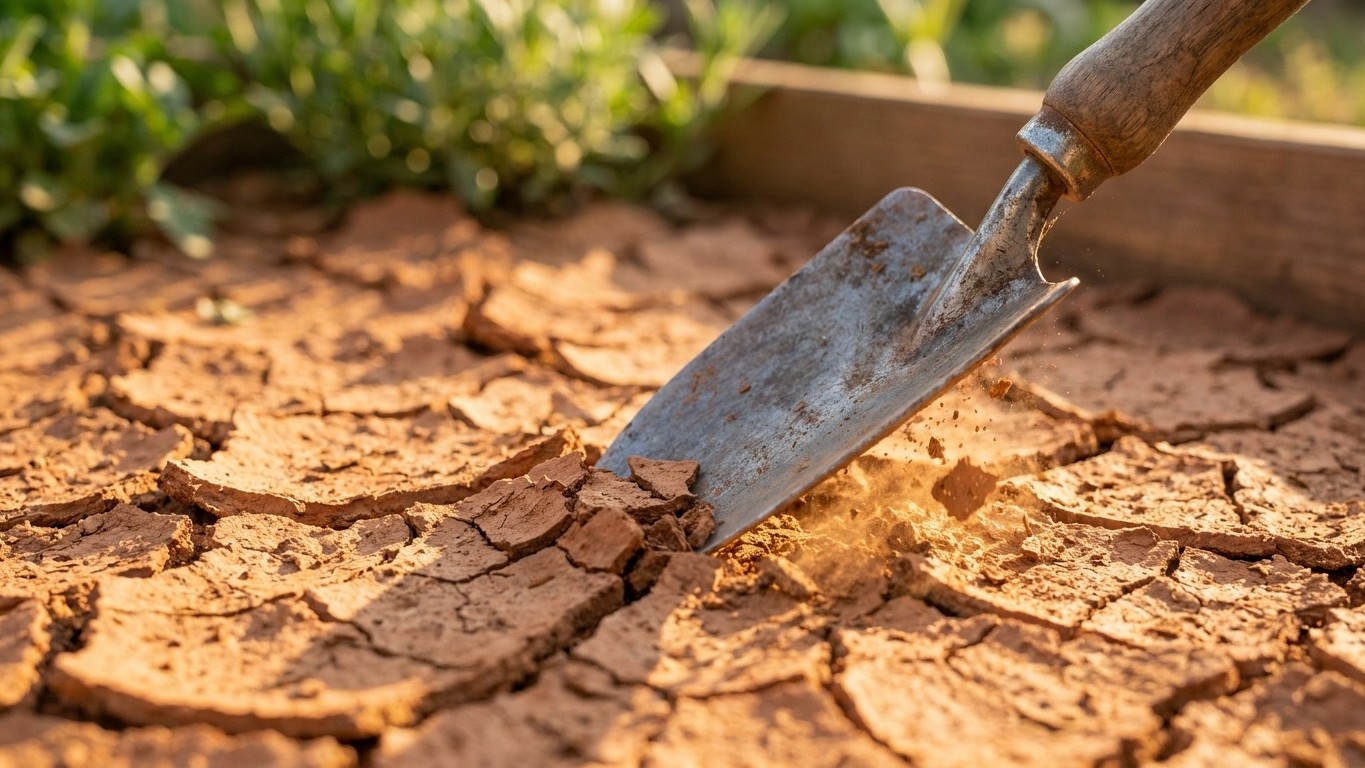
Three weeks of nothing, then that unmistakable sound: a light scratch of the trowel against soil that felt more like a terracotta pot than a garden bed. That crust wasn’t just dry dirt. It was the exact reason those carrot and parsley seeds never had a chance.
Sowing “just to fill a bed” in late July sounds harmless enough, but carrots and parsley are two of the pickiest germinators in the vegetable patch, and summer heat exposes every mistake at once. Carrots are notoriously finicky about germination, taking 1 to 3 weeks to come up and requiring very consistent moisture. Parsley is worse. While basil sprouts in five days and chives appear within a week, parsley seed can sit in warm, moist soil for three to five weeks without showing a single sprout. Neither seed forgives a gardener who sows and walks away.
Key takeaways
- A single hot day can bake soil into an impenetrable crust—one that fragile carrot seedlings can’t break through from below
- Parsley has a hidden biological twist: germination inhibitors in its seed coat that make summer sowing even trickier than most gardeners realize
- Late July’s heat and humidity create the worst possible conditions for slow-germinating seeds, yet the fix is simpler than replanting entirely
The crust that seals a seed’s fate
Here’s what actually happened underground. A first watering, maybe generous, compacted the surface. Then a hot July stretch dried that top layer into something closer to a lid than soil. After rain or watering, the soil can dry in the sun until the top layer bakes into a firm crust, creating a tough barrier at the surface. For a carrot seedling, that’s a death sentence before it even sees daylight: because carrot seedlings are so small and fragile, they usually do not have the strength to break through it, and instead, when the sprout reaches this hardened layer, it hits the barrier, curls back on itself, and dies beneath the soil.
What makes this so brutal is how little time it takes to go wrong. Just a day or two of the soil drying out could drastically reduce germination success because it causes soil crusting, and a crusted soil surface makes it extremely hard for seedlings to burst upward into the light. Carrot seeds don’t get a second attempt buried deep in the ground either. The fact that carrot seeds are planted so close to the surface can make matters even worse, and they easily dry out because they’re planted in the top 1″ of soil that is exposed to sunlight. One missed watering on a scorching afternoon, and the seed is stranded under a hardened dome it can’t lift.
Parsley adds its own complication, one that has nothing to do with crust. Its biology is simply slower. Parsley is naturally slow germinating, and along with carrots and celery, it can suffer from having seeds with underdeveloped embryos, meaning that once sown, these seeds still need time to develop and mature before they can germinate, and whilst in this immature state they are susceptible to soil pests and diseases. Some seed sources go further, pointing to actual germination inhibitors baked into the seed coat. The cause isn’t bad seed or wrong technique, it’s chemistry: the seed coat contains compounds that inhibit germination, and once you know how to remove them, parsley’s timeline collapses from frustrating to predictable. Translation: parsley was never going to sprint out of the ground in three weeks even under ideal conditions, and late July soil is rarely ideal.
Why late July made things worse
Timing Matters More Than most casual gardeners assume. Parsley is a cool-weather herb at heart, and asking it to germinate during the hottest stretch of summer is asking a lot. Parsley is a cool-season herb that germinates best in moderate soil temperatures and produces most actively before midsummer heat. Optimal soil Temperature sits well below what a July afternoon delivers in most gardens. Soil temperature matters as much as the soak, with the optimal germination window at 65 to 70°F, and below 55°F, germination rate drops sharply and unpredictability increases. Push soil temperatures too high in the other direction and results get just as erratic.
Add wind or a heat spell on top of an already-compacted surface, and crusting becomes almost guaranteed. One high mowing seed expert put it plainly: crusting usually happens when you water heavily initially, which compacts the soil surface, and then it gets hot or windy and this dense layer dries out, with your seeds suspended somewhere inside, unable to break through the hardened soil. That’s precisely the scenario a late-July, fill-the-gap sowing tends to create, minus any of the extra attention a deliberate planting usually gets.
What actually works, even in midsummer
None of this means late-summer sowing is pointless. Some growers deliberately plant a second parsley crop in July specifically for a fall and winter harvest, but they treat the soil surface completely differently than a spring sowing would require. A few adjustments make the difference between another empty bed and an actual crop.
- Skip garden soil for covering the seed. The best success in germinating carrots comes from covering seeds with sterile potting mix instead of soil, since fresh potting mix helps prevent the soil from crusting and helps retain moisture.
- Water little and often rather than one deep soak. A micro-watering system that gives a constant light spray keeps seeds from shifting in the ground and washing away or getting exposed.
- Shade the surface. Laying burlap, newspaper, or shade cloth over the sown area helps keep the soil moist during hot stretches.
- Give parsley a running start. Soaking parsley seeds in water for 12 to 24 hours before planting helps speed up germination.
- Break the crust before it forms. Mixing in radish seeds with the carrots works because radishes sprout first and help break up the soil as they grow.
One thing rarely gets mentioned in the germination guides: a board laid directly over the seeded row does more than shade cloth ever could in a heat wave. When the board is placed directly on the soil surface, the soil will retain moisture and will not need much water if any. Just remember to lift it and check the moment the first sprout tries to push through, because a board that stays too long turns from ally into obstacle overnight.
Sources : therike.com | sowrightseeds.com