
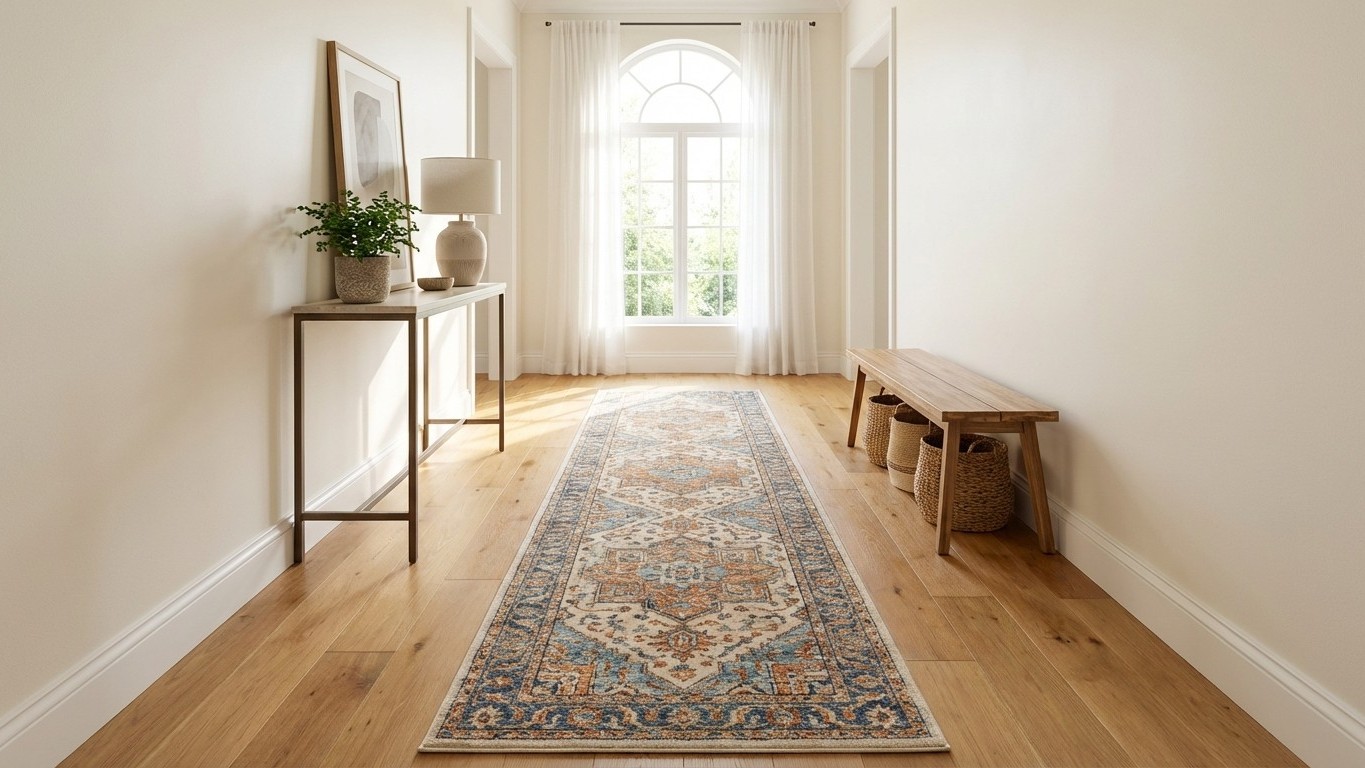
Three rugs, countless dollars wasted, and one very frustrated homeowner—that was me until I stumbled upon the proportion Transformed-my-living-room-in-minutes”>Rule That Transformed My hallway from a decorating disaster into a space I actually love walking through. The breakthrough came not from an expensive interior designer, but from understanding one fundamental principle that most of us completely ignore when selecting hallway runners.
The Mistake-i-finally-stopped-making”>mistake I kept making, and the one I see repeated in homes everywhere, stems from thinking about hallway rugs as mere floor coverings rather than integral design elements that need to relate harmoniously to their surroundings. My first rug was too short, ending abruptly and making my already narrow hallway feel choppy. The second was too wide, constantly bunching up against the baseboards and creating a tripping hazard. The third seemed right in the store but looked completely lost once I got it home.
The Golden Proportion That Changes-everything-to-stop-back-pain-in-the-kitchen”>changes everything
The rule that finally clicked is deceptively simple: your hallway rug should cover approximately two-thirds to three-quarters of your hallway’s width, leaving equal borders of exposed flooring on each side. This proportion creates visual balance while allowing the architecture of your space to breathe. When a rug is too narrow, it floats awkwardly in the center like an afterthought. When it’s too wide, it overwhelms the space and fights with the walls for attention.
But width is only half the equation. Length requires even more strategic thinking. The ideal hallway runner should extend almost the Entire length of the corridor, stopping about six to twelve inches from each end. This creates a sense of continuity and flow that guides the eye Naturally through the space. Short rugs that cover only a portion of the hallway create visual interruptions that make narrow spaces feel even more cramped and disjointed.
Reading Your Hallway’s Unique Language
Understanding proportion means learning to read the specific language of your hallway’s architecture. High Ceilings can handle bolder patterns and darker colors because they have the visual weight to support them. Low ceilings benefit from lighter tones and simpler designs that won’t compete for attention with the compressed vertical space. Similarly, very narrow hallways need rugs that enhance the sense of width, while wider corridors can accommodate more dramatic patterns that won’t feel overwhelming.
The flooring beneath your rug also influences these proportions. Hardwood floors with strong grain patterns need rugs that complement rather than compete with that natural texture. Neutral stone or tile provides a blank canvas that can support more adventurous rug choices. The key is recognizing that your rug and existing flooring should work together as a cohesive design element, not fight for dominance.
Color temperature plays a crucial role in proportion success as well. Warm-toned rugs tend to advance visually, making them feel larger and more prominent in the space. Cool tones recede, which can be perfect for maintaining the right visual balance in smaller hallways. This doesn’t mean you must choose boring neutrals, but rather that you should consider how color intensity affects the perceived size and impact of your runner.
Beyond Proportion: The Practical Magic
Once you nail the proportions, practical considerations become much clearer. Traffic flow becomes intuitive when your rug follows the natural walking path through your hallway. Maintenance becomes manageable when the size and placement make sense for your lifestyle. Safety improves dramatically when the rug lies flat and stable, with adequate clearance from doors and proper placement relative to light switches and frequently accessed areas.
The transformation in my own hallway was immediate and dramatic. What had been a awkward transition space became a welcoming corridor that actually enhanced the flow between rooms. Guests comment on how much larger and more intentional the space feels, even though nothing Changed-everything”>Changed except applying this simple proportion principle.
Making the Rule Work for Your Reality
Real homes have real constraints, and the proportion rule adapts beautifully to various situations. Rental restrictions might limit your flooring options, but they can’t stop you from choosing the right-sized rug. Budget constraints might influence material choices, but proper proportions work regardless of price point. Even challenging architectural features like radiators, built-ins, or unusual angles become manageable when you understand how proportion creates visual harmony.
The most liberating aspect of mastering this rule is the confidence it brings to decorating decisions. Instead of second-guessing every choice or endlessly scrolling through inspiration photos, you have a concrete framework for evaluation. You can walk into any store or browse any website knowing exactly what size and proportions will work in your specific space.
My hallway taught me that good design isn’t about following trends or copying magazine spreads—it’s about understanding the fundamental relationships between objects and spaces. That simple proportion rule didn’t just solve my rug problem; it opened my eyes to how intentional design choices create spaces that feel genuinely welcoming and well-considered. The right hallway rug, properly proportioned, becomes more than a floor covering—it becomes the foundation for a space that works beautifully and makes perfect sense.