
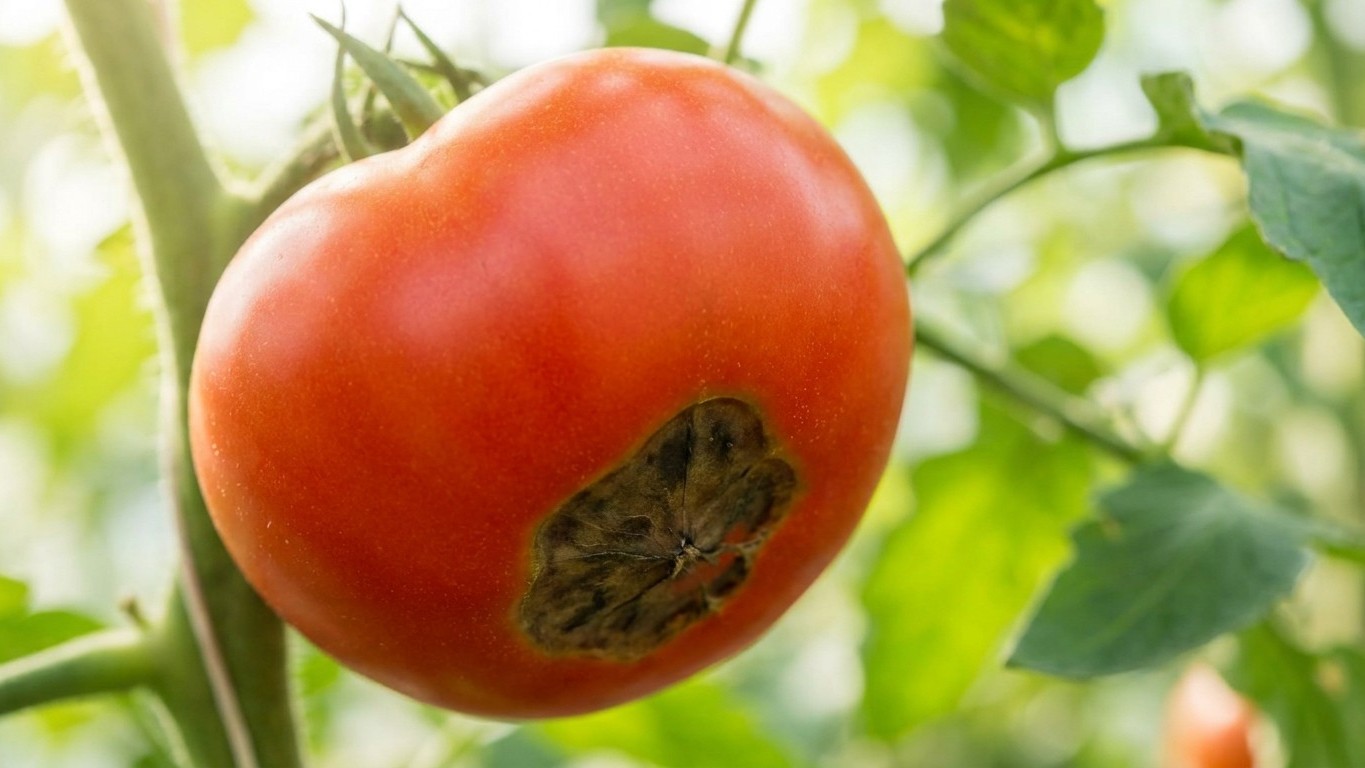
Weeks of spraying fungicide, and the black spots on the bottom of the tomatoes kept spreading. That’s the frustrating reality for countless home gardeners who spot dark, sunken patches on their prized fruit and immediately reach for a chemical solution. The problem: those bottles never had a chance to work, because the culprit was never a fungus in the first place.
The condition is called blossom end rot, and it’s one of the most misdiagnosed issues in the vegetable garden. It looks alarming, spreads fast across a plant’s fruit, and mimics the visual signature of a fungal infection closely enough to fool even experienced growers. Sometimes, affected tissues can be colonized by secondary microorganisms, and spots will take on the appearance of a fungal disease. That secondary infection is often what convinces gardeners they’re dealing with something contagious. They’re not.
Key takeaways
- A common gardening mistake wastes time and money on the wrong treatment
- The damage happens inside the plant long before it appears on fruit
- One simple adjustment to your routine prevents future damage completely
What’s Actually Happening Inside the Plant
Blossom-end rot isn’t caused by a disease or pest. Instead, it is the result of a lack of calcium in the plant. This lack of calcium may be due to low calcium levels in the soil or, more often, soil that is over- or underwatered. This is the detail that changes everything about how to respond. No fungicide, no matter how frequently applied, addresses a water-delivery problem.
The mechanism is almost mechanical once you understand it. Calcium movement in the plant is dependent on transpiration, the loss of water to the atmosphere from plant leaves, stems, and flowers. Calcium is taken up through the roots and relies on water flow through the xylem for transport through the plant. This movement of water through the xylem is driven by the process of transpiration. Cut off that steady flow, even for a few days, and the fruit farthest from the stem, the blossom end, simply stops receiving what it needs.
Here’s the part that surprises most gardeners: once calcium reaches a leaf, it’s stuck there. Calcium is not redistributed from the leaves to the fruit. So even a plant growing in calcium-rich soil can develop the condition if watering swings between soggy and bone-dry. Inconsistent watering is the main cause of calcium deficiency. Wide fluctuations in soil moisture reduce the plant’s ability to take up calcium from the soil. When the demand for calcium exceeds the supply, the tissues in the fruit break down, and blossom-end rot occurs.
Why the Fungicide Was Doomed From the Start
A gardener who’s dealt with this firsthand put it bluntly: many farmers and gardeners may treat this condition as a fruit disease; however, nutrient and water management regimes are the culprit. Spraying a fungicide onto fruit that’s failing because of erratic irrigation is a bit like changing the oil on a car with a flat tire. The product isn’t wrong, it’s just aimed at the wrong system entirely.
Container tomatoes get hit particularly hard, and there’s a reason. Blossom-end rot is more likely to develop when fruiting vegetables are grown in raised beds, especially when planted in the southern- or southwestern-facing corners of raised beds where the soil moistures levels can be more quickly depleted. Potted tomato, pepper, eggplant and squash plants are generally more susceptible to this nutritional problem than when grown in the ground. Less soil volume means less buffer against a missed watering day. A container that dries out on a hot Tuesday afternoon can trigger damage that shows up on the fruit days later.
Calcium sprays, the other popular fix, aren’t much better on their own. Foliar calcium spray has limited effectiveness, calcium is poorly absorbed through leaves. It can help as a short-term supplement for container tomatoes but won’t fix the underlying cause (watering inconsistency) in ground-grown plants. They can offer a marginal boost, but without fixing the water schedule, the fruit keeps failing.
The Actual Fix, and What It Won’t Undo
The gardener’s advice was simple, and it matched what extension services across the country recommend. Establish a rhythm and stick to it. Extension services consistently recommend 1 to 1.5 inches per week during the fruiting period. Rutgers NJAES specifies 1 inch weekly; the Alabama Cooperative Extension recommends 1.5 inches during active fruiting. A rain gauge or a simple moisture meter removes the guesswork that leads to the boom-and-bust watering cycle in the first place.
Mulch Matters More Than most people assume. Fluctuating soil temperatures can affect calcium absorption, particularly when the soil cools rapidly. A few inches of straw mulch can help stabilize soil temperatures from swinging too wildly one direction or the other. Combined with even watering, it acts as insurance against the swings that starve fruit of calcium.
Soil chemistry plays a supporting role too, though it’s rarely the headline cause. Most US garden soils have adequate calcium, your BER is almost certainly a watering issue, not a soil issue. But if you’ve been adding Epsom salt, applying high-N fertilizers heavily, or gardening in very sandy or high-rainfall conditions, a test confirms whether the soil is the variable. It also tells you whether your pH is in the 6.2–6.8 range where calcium uptake is most efficient. Nitrogen-heavy fertilizer deserves a second look, too, since it pushes the plant to prioritize leaves over fruit at exactly the wrong moment.
None of this rescues fruit that’s already scarred. Affected fruits won’t recover, but future fruits will be fine once watering is corrected. Remove affected fruits, they won’t recover, and leaving them on the vine wastes the plant’s resources. Snip the damaged ones, fix the schedule, and the next wave of fruit usually comes in clean. Indeterminate varieties, the ones that keep flowering and fruiting all season, tend to bounce back fastest once the water problem is solved, simply because they get more chances to prove it.
Sources : bloomingexpert.com | homegarden.cahnr.uconn.edu