
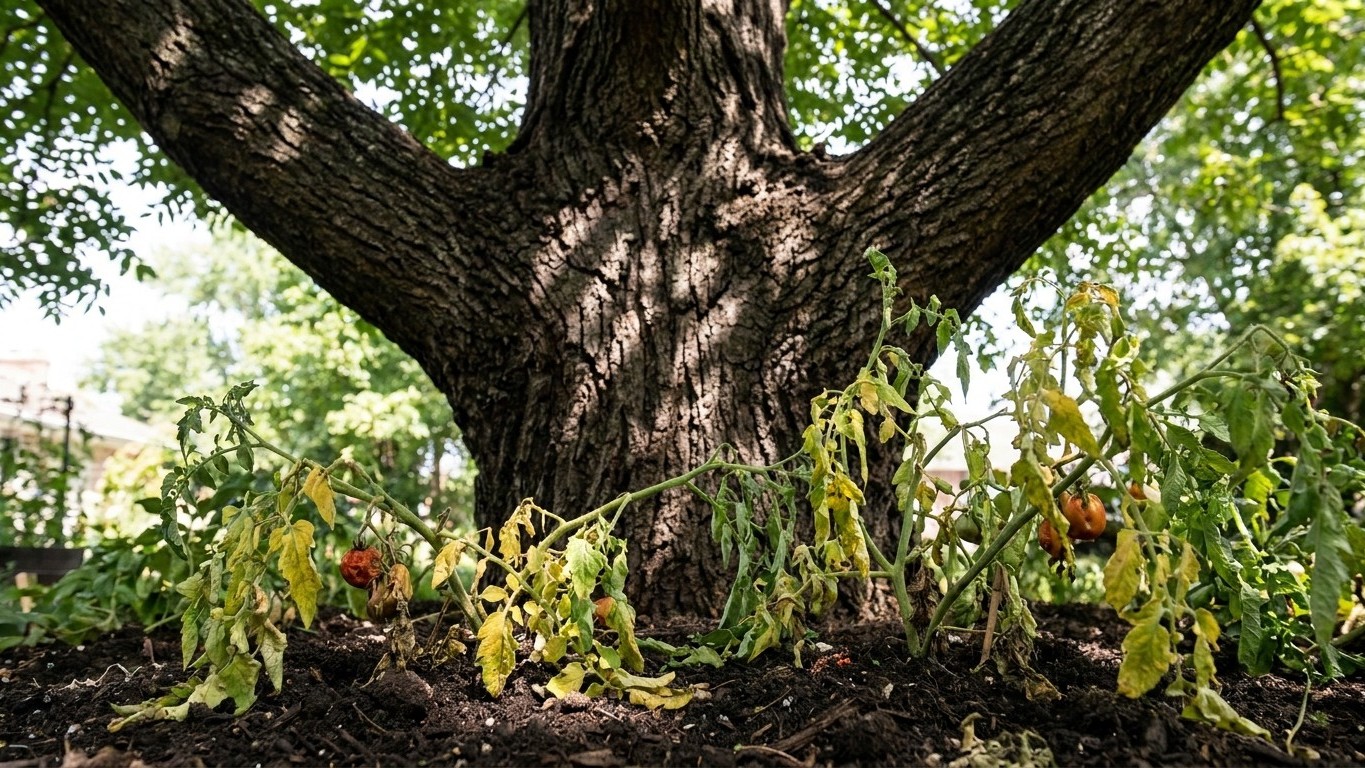
Some trees don’t just grow, they fight. And if you’ve ever wondered why your tomatoes wilt, your hostas refuse to thrive, or your flower beds look perpetually defeated despite good soil and regular watering, the culprit might be standing right there in your yard, roots quietly spreading underground. The black walnut tree (Juglans nigra) is the most aggressive botanical neighbor you can have, and most homeowners don’t figure this out until they’ve lost a full season’s worth of plants.
Key takeaways
- A mysterious tree in your yard might be chemically poisoning plants up to 60 feet away, and you’d never suspect it
- Some plants mysteriously thrive while others mysteriously fail in the same garden—here’s why
- There’s a proven strategy gardeners use to reclaim toxic zones, but it requires understanding the enemy first
The chemical weapon growing in your backyard
Black walnuts produce a compound called juglone, a toxic substance present in every part of the tree: the roots, the bark, the leaves, the hulls, even the soil directly beneath its canopy. Juglone interferes with a plant’s ability to respire, essentially shutting down the enzymatic processes that keep it alive. The affected plant doesn’t always die dramatically. More often, it just… stalls. Yellowing leaves, stunted growth, a slow decline that gardeners misread as drought stress or poor nutrition.
The toxic zone extends well beyond the tree’s visible canopy. Research from Purdue University has documented juglone activity in soil up to 60 feet from the trunk, nearly the length of two school buses laid end to end. That means a mature black walnut standing at the edge of your property line can be poisoning a vegetable garden you planted twenty feet away, and you’d have no obvious reason to connect the two.
The old gardener who pulled me aside at a community garden wasn’t being dramatic when she said “pull them all out now.” She had spent three seasons trying to grow peppers, strawberries, and several flowering perennials in what turned out to be the outer root zone of a walnut on the neighboring lot. She lost hundreds of dollars in plants before a soil test, and a conversation with her county extension agent, revealed the actual problem.
Which plants are most vulnerable (and which ones aren’t)
The sensitivity varies enormously by species, which is part of what makes juglone toxicity so confusing to diagnose. Some plants are highly susceptible: tomatoes, peppers, and eggplants in the nightshade family react quickly and dramatically. Blueberries, apples, lilacs, and rhododendrons are also known to struggle or die in walnut proximity. Alfalfa, peonies, and most conifers round out the list of plants that reliably fail near this tree.
On the other side, a surprising number of common garden plants tolerate juglone without much complaint. Black raspberries, violets, hostas (with some caveats), Virginia bluebells, and several ornamental grasses grow fine within the tree’s influence zone. Corn, beans, squash, and beets also tend to hold their own. This patchy tolerance is why some gardeners spend years dismissing the juglone theory, their marigolds survived, so they assume the walnut couldn’t possibly be the issue. The marigolds are just one of the tolerant species.
Decomposing walnut material in the soil remains toxic long after the leaves have broken down. Fresh black walnut sawdust or mulch can kill sensitive plants almost immediately. Even compost made with walnut leaves requires two or more years of active hot composting before the juglone degrades sufficiently to be considered safe, and most home compost piles never reach the temperatures needed to accelerate that process.
What to actually do about it
If the tree is on your property and removal is an option, that’s the most complete solution, but not an instant one. Juglone persists in the soil for years after a black walnut is cut down, as long as old roots remain and continue to break down. Most experienced gardeners recommend waiting at least two years post-removal before planting sensitive species in the area, and testing soil in multiple spots before trusting the ground again.
If removal isn’t possible, whether the tree belongs to a neighbor, sits on a property line, or you simply want to keep it — the practical strategy is to work with the biology rather than against it. Map the affected zone generously, adding a buffer beyond the canopy drip line. Raised beds with physical barriers between the new soil and the native ground can reduce juglone exposure significantly, though they don’t eliminate it entirely if roots eventually penetrate the barrier. Use thick landscape fabric as a root barrier, combined with at least 12 inches of clean imported soil.
Choosing the right plants for the zone matters more than almost anything else. Replacing susceptible species with proven juglone-tolerant varieties turns a problem area into a manageable garden. Many gardeners pivot toward native woodland plantings in walnut proximity, trout lily, wild ginger, and Jack-in-the-pulpit all grow naturally alongside black walnuts in eastern North American forests, which is a pretty reliable indicator of compatibility.
One detail worth knowing: the eastern black walnut is by far the most problematic species in North American gardens. English walnuts (Juglans regia), the type commercially grown for nut production, produce juglone at much lower concentrations and are significantly less damaging to neighboring plants. If you’re evaluating a property with an existing walnut tree, identifying the species early can save you a lot of frustration and wasted effort. A quick look at the bark texture, nut size, and leaflet count will tell you which one you’re dealing with, and whether you need to rethink your entire planting plan from the ground up.