
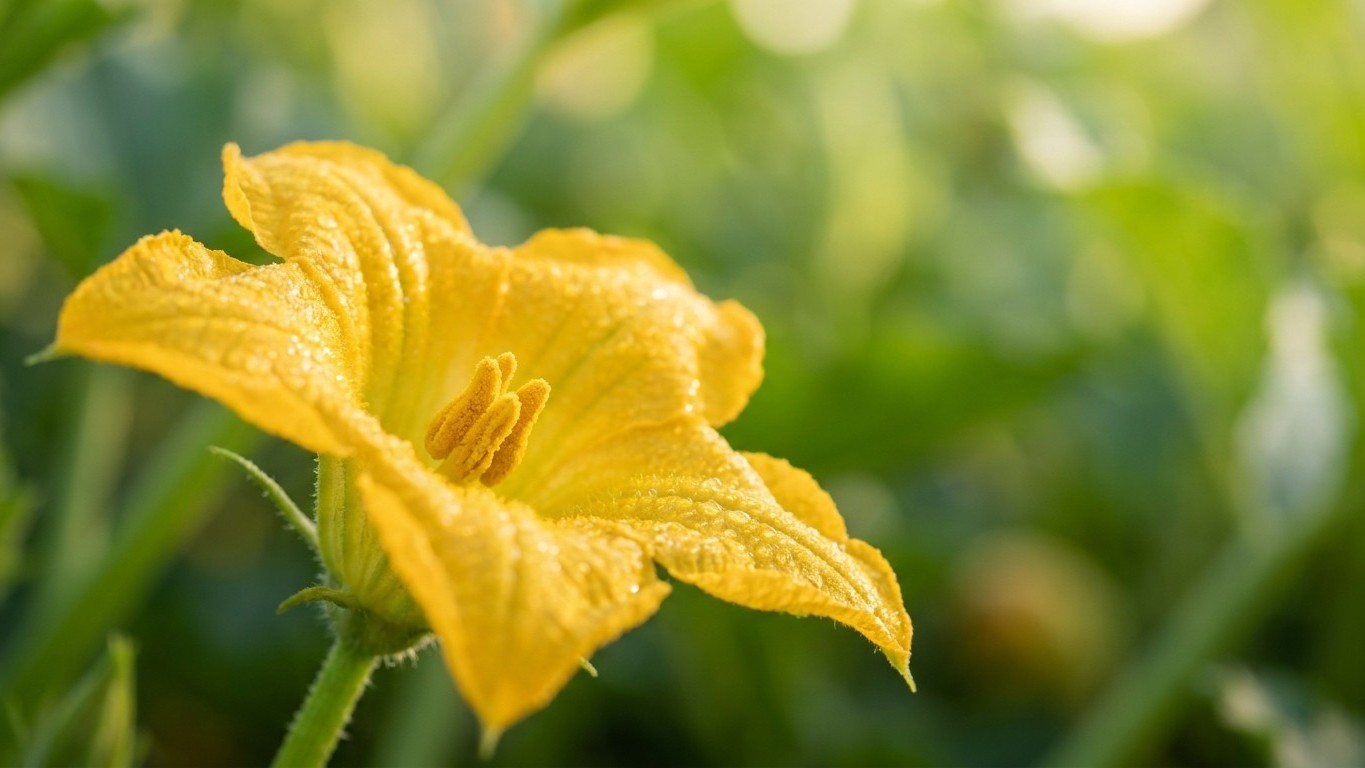
Zucchini plants are almost comically productive, once they get going. A single healthy plant can bury a kitchen in squash by midsummer. So when the vines sprawl, the leaves look strong, and fat yellow flowers open every morning, the expectation is clear. Then nothing happens. The flowers drop. The tiny proto-fruits shrivel and fall off. Frustrating doesn’t begin to cover it.
The culprit, in most cases, isn’t disease, poor soil, or bad luck. It’s timing, specifically, a narrow window in the morning that most home gardeners either ignore or simply don’t know exists.
Key takeaways
- Zucchini flowers are only receptive to pollen for a single morning, and most home gardeners aren’t around to witness the critical pollination window
- Bees do the heavy lifting, but they’re most active between 7-9 a.m.—exactly when many gardeners are still asleep
- A 90-second hand-pollination technique can transform your fruitless flowers into consistent harvests, even in heat waves or low-pollinator zones
Why Zucchini Plants Flower Without Producing Fruit
Zucchini (Cucurbita pepo) is a monoecious plant, meaning it produces separate male and female flowers on the same plant. Male flowers appear first, often a week or two before female flowers show up, and they’re purely pollen donors. Female flowers come later, identifiable by the tiny swollen base (the immature fruit) sitting just behind the petals. For a zucchini to actually form, pollen from a male flower must reach the stigma of a female flower. No transfer, no fruit.
The transfer job mostly falls to bees. Bumblebees and honeybees are the primary workers, and they tend to visit squash flowers heavily in the early morning. Here’s where timing becomes everything: zucchini flowers are only receptive, meaning the female flower’s stigma is sticky and ready to accept pollen — for a single morning. By afternoon, even on the same day they opened, most female flowers are already closing and losing viability. The male flowers, similarly, release most of their pollen in the first hours after sunrise.
The precise window varies slightly by temperature and variety, but between 6 a.m. and 10 a.m. is the functional range. Gardens that don’t see pollinator activity during those hours, for whatever reason, will consistently produce flowery but fruitless plants.
What’s Actually Happening in Your Garden Before Breakfast
Most gardeners do their garden rounds in the evening, after work, after dinner, in the cooler part of the day. That’s understandable. But by 6 p.m., the zucchini pollination story for that day is already over. The flowers that opened that morning either got visited by a bee and are quietly forming fruit, or they didn’t and are already beginning to drop.
Pollinator absence in that morning window is more common than people realize. A 2023 analysis published in the journal Basic and Applied Ecology noted that bee activity in residential gardens peaks sharply between 7 and 9 a.m. on warm, calm days, but drops dramatically when temperatures exceed 85°F, a problem that hits earlier in the day than it used to, given recent summers. In heat waves, bees can retreat by 8 a.m., cutting the functional pollination window nearly in half.
A shaded garden presents a different version of the same problem. Bees prefer flowers that have warmed up slightly in the sun; zucchini plants growing in partial shade, especially those that don’t receive direct morning light, produce flowers that warm more slowly and attract fewer early visitors. The plant looks fine, the flowers look healthy, but the interaction simply doesn’t happen at the right time.
How to Hand-Pollinate (and Why It Actually Works)
Hand-pollinating zucchini sounds like an obsessive gardener’s hobby. It’s actually a reliable fix, takes about 90 seconds per plant, and gives gardeners direct control over a process they were previously leaving entirely to chance.
The method is straightforward. In the morning, between 7 and 9 a.m., identify an open male flower, the one on the slim straight stem, with no swelling at the base. Pick it, peel back the petals to expose the pollen-covered anther, then use it like a brush against the center of an open female flower. One male flower can typically pollinate two or three female flowers. Some gardeners skip even that step and use a small, dry paintbrush to transfer pollen, though direct contact is slightly more effective.
A visual cue worth knowing: a successfully pollinated female flower will have a stigma that looks slightly wet or shiny just after pollination. The tiny fruit at its base will begin to swell noticeably within 24 to 48 hours. If it doesn’t swell and instead yellows at the tip, pollination failed, try again the next morning with fresh flowers.
Gardeners who’ve switched to consistent hand-pollination during heat waves or in low-pollinator urban gardens often report a near-complete conversion of female flowers into fruit, compared to the hit-or-miss results they got relying on bees alone.
The Other Morning Variable Most Guides Don’t Mention
Watering timing compounds the pollination problem in a way that rarely gets discussed. Overhead watering in the morning, from sprinklers or a hand-held hose aimed at the foliage, can wash pollen off open male flowers before bees arrive, or make the stigma of female flowers too wet to retain pollen effectively. A study from the University of California Cooperative Extension found that zucchini plots watered overhead in the early morning showed measurably lower fruit set than those watered at soil level or in the evening.
Drip irrigation, soaker hoses, or simply directing water at the root zone rather than the flowers makes a genuine difference. The flowers stay dry, pollen remains viable, and bees can work the blooms without interference. For container-grown zucchini on a balcony or patio, increasingly common in urban settings, watering from below the foliage is even more critical given the already limited pollinator access.
One thing worth adding: if a plant is producing exclusively male flowers for the first two to three weeks, that’s normal and not a failure. Zucchini staggers flower production deliberately, giving male flowers a head start so pollen is already available when female flowers arrive. The patience required is short, usually less than two weeks, but many gardeners give up or assume something is wrong precisely during that normal developmental gap.