
Grass clippings seem like the perfect compost ingredient. Free, abundant, already shredded by the mower, rich in nitrogen. For months, every time I finished mowing, I’d dump a fresh layer straight onto the pile. The logic felt airtight. Then one morning, the pile smelled like the inside of a barn in August, that sharp, eye-watering ammonia hit that tells you something has gone seriously wrong. That smell was the pile’s way of sending a distress signal, and I finally had to listen.
Key takeaways
- Why that pungent ammonia smell signals your pile is actively wasting nitrogen as gas
- The one number (carbon-to-nitrogen ratio) that determines whether your pile thrives or fails
- Three surprisingly simple fixes that work within days, not months
Why Grass Clippings Are Both a Gift and a Problem
Fresh Grass Clippings Are roughly 4% nitrogen by weight, which makes them one of the most nitrogen-dense materials a home composter can get. For context, that’s significantly higher than kitchen scraps or coffee grounds. All that nitrogen is what drives rapid decomposition, microbes use it to build proteins and multiply fast. So far, so good.
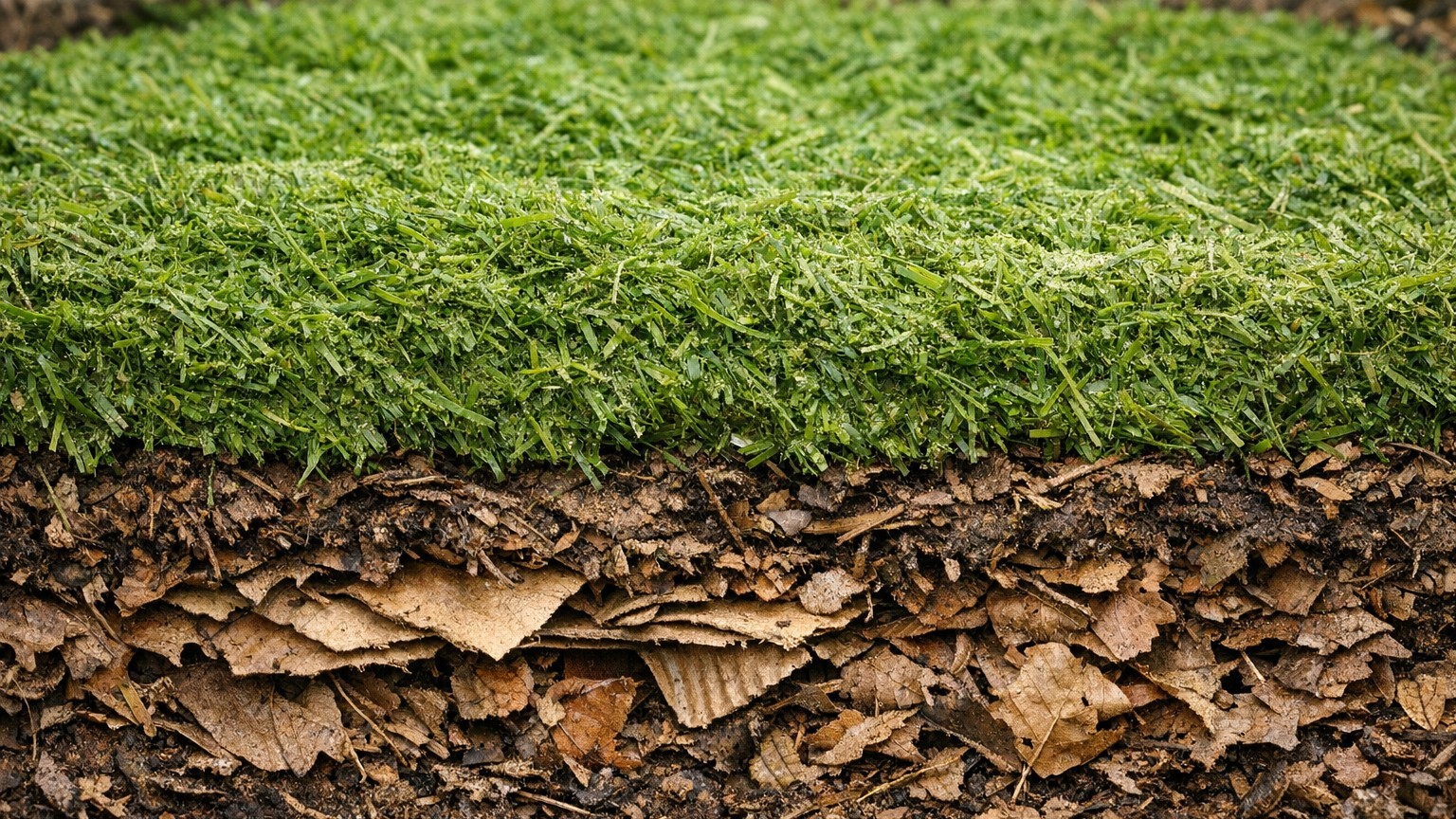
The issue is texture. Freshly cut grass blades are thin, wet, and sticky. Layer them more than an inch or two thick, and they mat together into a dense, airless sheet, the composting equivalent of plastic wrap. Oxygen can’t penetrate. The aerobic bacteria that do the clean, efficient work of breaking down organic matter suffocate. What takes over instead are anaerobic bacteria, which thrive without oxygen and produce a very different set of byproducts: hydrogen sulfide (the rotten egg family), and yes, ammonia from excess nitrogen that has nowhere productive to go.
The ammonia smell specifically signals that nitrogen is being lost as gas rather than being captured in your compost. Every whiff you catch is essentially Fertilizer evaporating into thin air. A pile that reeks of ammonia is a pile that’s actively wasting its own value.
The Carbon-to-Nitrogen Ratio: The Number That Changes Everything
Healthy compost runs on balance. Microbes need both carbon (their energy source) and nitrogen (their protein source) to thrive, in a ratio of roughly 25 to 30 parts carbon for every 1 part nitrogen. Grass clippings come in at about 20:1, already nitrogen-heavy. Stack layer after layer of them without adding anything else, and you’re feeding the pile a diet that’s almost pure protein with no carbohydrates. The microbial population spikes briefly, burns through oxygen, and then crashes into anaerobic chaos.
What corrects this is what composters call “browns”, carbon-rich materials. Dried leaves, cardboard torn into pieces, straw, wood chips, even shredded newspaper. Dried fall leaves clock in around 60:1, which makes them nearly the perfect counterweight to grass clippings. The classic rule of thumb: for every bucket of fresh grass you add, mix in two to three buckets of dry, carbon-rich material. The pile should look more like a loosely mixed salad than a green smoothie.
Cardboard, which most households have in abundance, works particularly well because its corrugated structure creates physical air pockets as it breaks down slowly. Shredding it first speeds things up considerably, thick, intact sheets can take months to decompose even in a hot pile.
Three Fixes That Actually Work
After the ammonia incident, the first thing I did was stop adding fresh clippings directly. Instead, I started spreading them in thin layers, no more than half an inch at a time, and immediately covering each layer with a thick handful of dried leaves I’d stored in bags from the previous fall. The smell disappeared within four days. The pile started warming up noticeably, which is the sign that aerobic microbial activity has resumed.
A second approach that works surprisingly well: let the clippings dry on the lawn for a day before collecting them. A thin layer of sun-dried grass loses much of its moisture, stops matting as aggressively, and shifts slightly toward a more balanced carbon ratio as it dries. It’s not a perfect solution on its own, but combined with browns, it gives the pile a much easier starting point.
The third fix is the one most people overlook: turning the pile. A simple garden fork, pushed into the pile and twisted a few times, reintroduces oxygen and physically breaks up any matted layers. Doing this every three to five days during heavy grass-clipping season keeps the aerobic bacteria dominant and the temperature high enough (ideally between 130°F and 160°F) to kill weed seeds and pathogens. A compost thermometer costs about $15 and removes all the guesswork.
What a Well-Managed Grass Clipping Pile Actually Produces
Get the balance right, and grass clippings become one of the fastest composting materials available. Under ideal conditions, proper carbon-to-nitrogen ratio, adequate moisture, regular turning — a pile heavy in grass clippings can produce finished compost in as little as four to six weeks during summer. Compare that to a standard mixed pile, which often takes three to six months.
The finished product is particularly valuable for lawns and vegetable gardens. Because grass clippings are nitrogen-rich to begin with, the resulting compost tends to be more nutrient-dense than compost made primarily from cardboard and wood chips. Spread an inch of it around tomatoes or peppers in midsummer and the difference in leaf color and fruit set becomes visible within two weeks.
One detail worth knowing: if your lawn has been treated with broadleaf herbicides like clopyralid or aminopyralid, those chemicals can persist through composting and damage sensitive plants like tomatoes, beans, and carrots. They don’t break down in heat the way pathogens do. If you’re unsure about your lawn’s treatment history, it’s worth doing a simple bioassay, growing a few bean seedlings in the finished compost before applying it broadly. Beans show herbicide damage quickly and unmistakably, long before you’ve spread contaminated compost across a whole garden bed.