
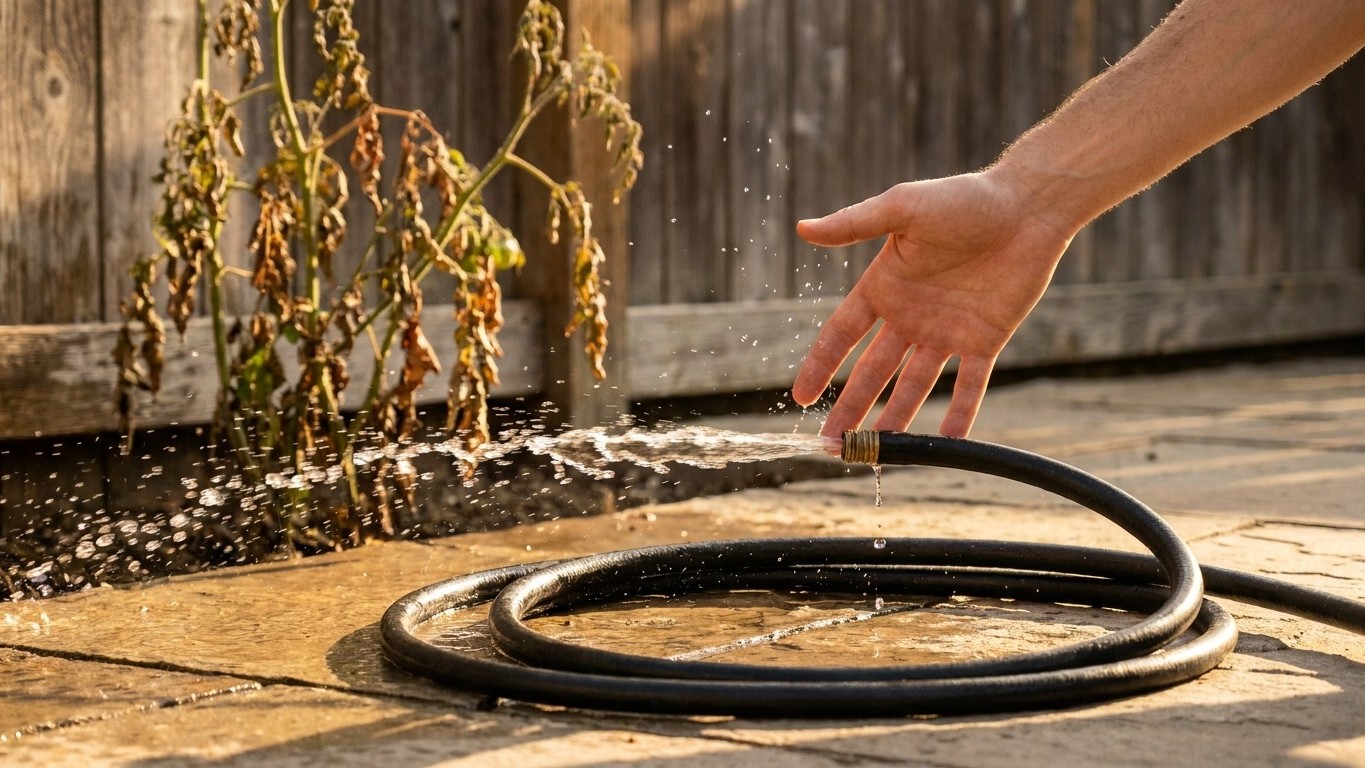
The water came out hot. Not lukewarm, not tepid, but genuinely hot, like something pulled from a kettle left too long on the stove. My hand jerked back before my brain caught up with what was happening. That garden hose had been sitting coiled on the patio since morning, soaking up direct sun for six or seven hours, and the water trapped inside had turned into something closer to tea than irrigation.
The tomato leaves told the story before I did. Brown patches, curled edges, a scorched look that mimicked disease but wasn’t. I’d been blaming blight, or maybe a nutrient issue. Turns out the culprit was standing right there in the yard, black rubber baking under July sun.
Key takeaways
- Garden hoses can heat water to 140°F+ in direct sun, causing severe plant damage
- You’re probably watering at the worst possible time of day without realizing it
- One simple habit—flushing the hose first—solves most of the problem immediately
Why Hoses Turn Into Heat Traps
A standard garden hose, especially the black or dark green rubber kind, absorbs solar radiation efficiently. Surface temperatures on dark hoses left in full sun can climb well above 140°F, according to measurements cited by university extension programs studying outdoor water safety. The water sitting stagnant inside doesn’t circulate or cool. It just sits there, absorbing heat from the hose walls until it matches or exceeds the material’s surface temperature.
This isn’t a minor inconvenience. The Consumer Product Safety Commission has flagged hose water as a genuine scald risk for children and pets who drink from outdoor spigots or kiddie pools filled without checking temperature first. Multiple pediatric burn studies have documented cases where hose water reached temperatures capable of causing second-degree burns in seconds, comparable to touching a stovetop.
For plants, the mechanism is simpler but no less damaging. Tomato roots and leaf tissue are built to handle warm soil and warm air, but not water that’s suddenly 30 or 40 degrees hotter than the ambient environment. When that heat hits foliage directly, especially on a leaf already stressed by midday sun, cell walls rupture. What looks like burning is exactly that: localized tissue death from thermal shock, not unlike what happens to human skin under scalding water.
The Timing Mistake Almost Everyone Makes
Watering tomatoes during the hottest part of the day compounds the problem twice over. First, the hose itself has had maximum sun exposure, meaning the water sitting in those first several feet is at its peak temperature. Second, the plant is already under heat stress, its stomata partially closed to conserve moisture, its tissues less able to cope with a thermal shock on top of everything else.
Cornell University’s home gardening program has long recommended watering in early morning specifically because it gives plants time to absorb moisture before the heat of the day arrives, reducing stress and disease risk from lingering moisture on foliage overnight. But there’s a secondary benefit nobody talks about enough: morning hoses haven’t spent hours cooking in sunlight. The water inside is closer to ambient overnight temperature, which is dramatically safer for both plants and skin.
I’d been doing Everything backward. Watering at 2 p.m. because that’s when I remembered to do it, using a hose that had been lying in full sun since sunrise, essentially delivering a mild scalding to plants that were already struggling with heat stress. The tomatoes weren’t sick. They were burned, plain and simple, by a mistake in timing and hose placement that had nothing to do with soil quality or pest pressure.
Simple Fixes That Actually Work
Letting the water run for 10 to 15 seconds before it touches any plant or skin flushes out the hot water trapped in the line, replacing it with cooler water from underground pipes or the tap source. This single habit solves most of the immediate danger, whether you’re filling a dog bowl or soaking a tomato bed.
Storing the hose in shade changes everything structurally. A hose coiled under a porch overhang, inside a storage box, or even just draped over a fence in partial shade won’t reach the extreme surface temperatures that a hose baking in direct sun will hit. Some gardeners switch to lighter-colored hoses specifically because pale surfaces reflect more solar radiation than black rubber, staying noticeably cooler to the touch during peak summer months.
Watering in early morning, ideally before 9 a.m., handles both problems at once: cooler water, less plant stress, and better absorption before evaporation kicks in. Evening watering works too, though it carries a slightly higher risk of fungal issues since foliage stays damp overnight. For tomatoes specifically, morning wins on nearly every metric that matters.
- Flush the hose for 10-15 seconds before use, every single time
- Store hoses in shade or indoors between waterings
- Water tomatoes before 9 a.m. when possible
- Choose light-colored hoses if buying new
- Check water temperature by hand before spraying delicate foliage
What the Burned Leaves Actually Mean for the Plant
Damaged leaf tissue doesn’t heal. Once cells rupture from heat shock, that section of the leaf is done contributing to photosynthesis, though the plant will often compensate by pushing new growth elsewhere if the root system remains healthy. The real risk isn’t cosmetic, it’s cumulative: repeated thermal stress from hot-water watering, especially combined with already-high ambient temperatures, can reduce fruit set and slow ripening because the plant is spending energy on damage repair instead of production.
Removing severely scorched leaves is reasonable once you’ve confirmed the cause, since dead tissue can become an entry point for fungal infection in humid conditions. But there’s no need to panic about the whole plant. Tomatoes are resilient, and a few burned leaves from one hot-water incident won’t tank a harvest the way sustained drought or a genuine pest infestation would.
What surprised me most, digging into this after the fact, was learning that black vinyl and rubber hoses can sometimes leach higher concentrations of chemicals like phthalates or antimony into stagnant hot water, according to testing referenced by consumer safety researchers, which is part of why some manufacturers now market “drinking water safe” hoses made without those additives for households using hose water on edible gardens. It’s not just about temperature. It’s about what that overheated water might be carrying into the soil around plants you’re planning to eat.