
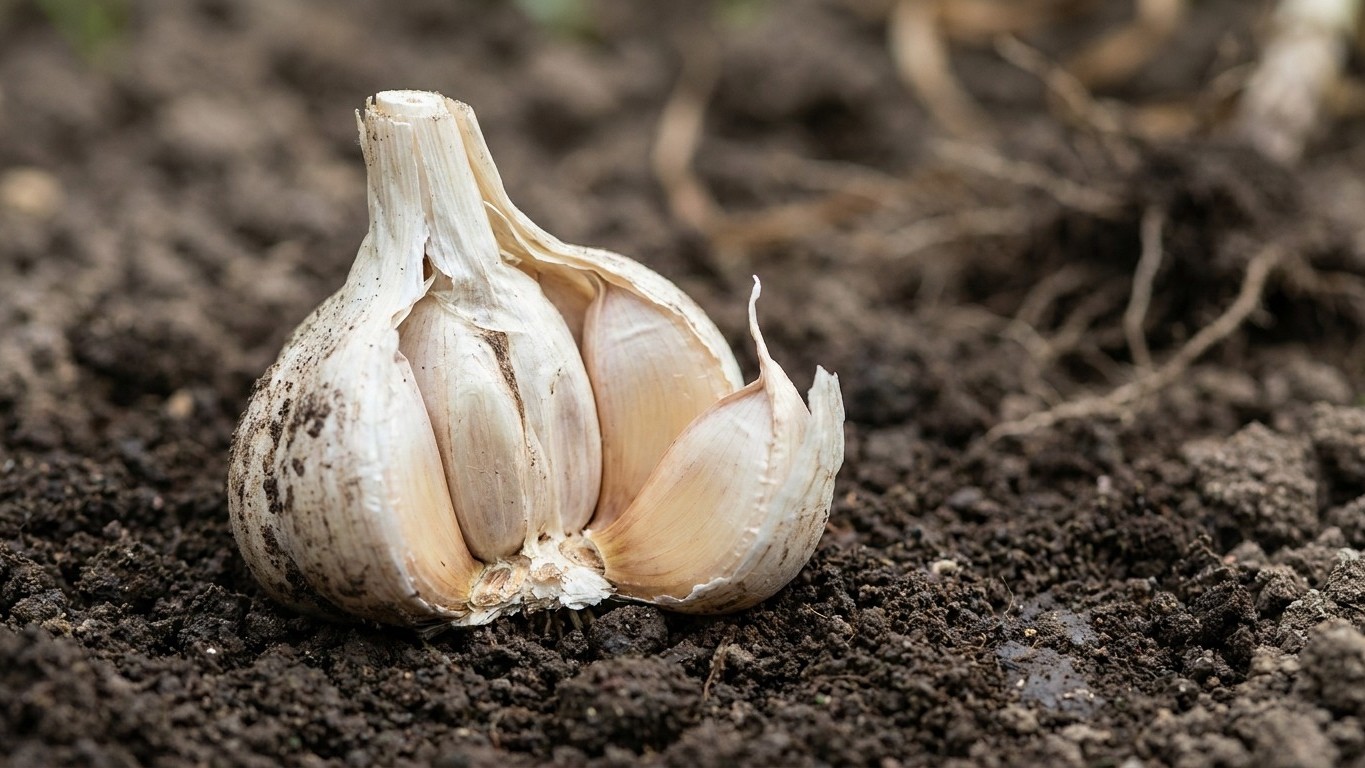
Pulling up a head of garlic only to find it has split into separate cloves, each one already pushing through its own wrapper, that’s a gardening mistake you remember. The bulbs look almost alien, the papery skin burst open, the cloves fanning out like a flower gone wrong. It happened to a neighbor of mine two summers ago, and she described it perfectly: “It looked like the garlic had given up waiting for me.” She wasn’t wrong.
Key takeaways
- Garlic bulbs split open when left in soil too long, but the plant never announces when it’s truly ready
- A split bulb won’t keep for more than a week or two—compare that to six months for perfectly timed harvest
- The real signal isn’t the calendar; it’s counting how many of the plant’s leaves have turned yellow
Why garlic splits, and why timing is everything
Garlic bulbs split when they stay in the ground past their peak maturity. Once the plant has done its job, converting all that leafy energy into a tightly wrapped bulb, it doesn’t just sit there patiently. Left too long, the outer wrapper deteriorates, the internal pressure builds, and the individual cloves begin separating from the central stem. Each clove essentially starts to act like its own independent plant, pushing outward. The bulb you worked so hard to grow becomes impossible to store and mediocre to eat.
The tricky part is that garlic doesn’t announce when it’s ready. There’s no color change on the skin, no sweet smell drifting across the garden. The signal is entirely in the leaves, specifically, in how many of them have died back. A reliable rule of thumb: harvest when roughly half the leaves (called scapes in hardneck varieties, but more broadly just the foliage) have turned yellow and brown, while the other half remain green. That balance point is where the bulb is fully formed but the wrapper is still intact. Wait until all the leaves are brown, and you’ve likely already missed the window.
Geography matters more than the calendar. In most of the continental United States, that window falls somewhere between late June and mid-July depending on your climate zone. Gardeners in the Pacific Northwest might pull hardnecks in late June; those in the warmer South could be Harvesting softneck varieties as early as late May. Pegging your harvest to “early July” as a fixed date, regardless of what the plant is telling you, is exactly how you end up with split bulbs.
What actually goes wrong when you wait too long
Split garlic isn’t just aesthetically disappointing. The exposed cloves lose moisture rapidly once separated, which means they shrivel faster and won’t keep for more than a week or two. Compare that to properly harvested, cured garlic, which can last six months to a year in the right conditions. That’s the difference between a pantry staple and a compost addition.
There’s also a flavor consequence that most people don’t expect. Overripe garlic tends to be sharper and more pungent raw, but it loses its nuance when cooked. The complex, slightly sweet depth that makes roasted garlic so appealing comes from bulbs harvested at the right moment. Overmatured garlic cooks flat, with a kind of one-dimensional heat that doesn’t mellow the way it should.
The splitting itself can attract problems in the soil, too. Once the wrapper breaks down, the exposed cloves are more vulnerable to fungal issues : Fusarium rot and white rot are two culprits that can set in quickly in moist summer soil. If you’re rotating crops or planning to plant in the same bed again, this matters for future seasons, not just this year’s harvest.
How to time it right, and what to do the day you harvest
Start checking your garlic around the time you plant, not when you think you should harvest. If you planted in fall (the standard approach for most of the U.S.), mark your calendar for 240 days later as a rough starting point for monitoring. Then go out every few days and count the green leaves. A hardneck variety typically has around eight to ten leaves at peak; when five or six have yellowed, it’s time to dig a test bulb.
Dig, don’t pull. Garlic roots grip the soil firmly, and yanking from the top risks snapping the stem right at the bulb, which ruins its storage potential. Use a garden fork or a narrow trowel, inserting it several inches away from the base of the plant and lifting gently. Shake off loose soil without scrubbing the wrapper. That outer skin is your storage protection; every scrape is a small liability.
After harvest, curing is where most home gardeners skip a step. Garlic needs two to four weeks in a warm, dry, well-ventilated space out of direct sunlight. A shaded porch, a barn, a covered carport, anywhere with good airflow. Hanging them in small bundles is ideal. The roots and stems dry down slowly, and the flavor actually concentrates during this period. Rushing the garlic into the kitchen within a few days means you’re eating fresh garlic, which is good, but not the fully developed bulb you could have had.
One detail worth keeping in mind: if you do pull up split bulbs, don’t throw them all out. Cloves that are still firm and unbruised cook perfectly well, use them within a week, freeze them peeled in a zip-lock bag, or blend them with olive oil and refrigerate for up to two weeks. Split garlic is a storage problem, not a culinary death sentence. The real loss is the crop you planned to save for winter. Those six jars of roasted garlic you imagined in October start with nailing the June harvest, not recovering from a July mistake.